
We believe everyone deserves a confident, healthy smile. Our approach makes it simple to understand how modern care can help you achieve straight teeth. We explain options clearly and guide you at every step, so the process feels manageable and calm.
Correcting crooked teeth is a journey we take with you—using advanced braces and clear aligners tailored to your needs. Our team focuses on comfort, function and appearance, balancing gentle care with expert technique.
Choosing our practice means your teeth get quality-focused attention from diagnosis to the end of your plan. We welcome families and busy professionals across Parramatta and beyond, offering personalised plans that fit modern life.
Key Takeaways
- We offer clear, affordable options to help you achieve a perfect smile.
- Personalised care addresses crooked teeth with modern braces and aligners.
- We prioritise comfort, quality and predictable results for all ages.
- Our team supports you through each stage with expert guidance.
- Easy, practical plans suit busy Australian families and professionals.
Understanding Orthodontic Treatments
Knowing what options exist helps you choose a path that is safe, effective and tailored to you.
Orthodontic treatment is a specialised area of dentistry that corrects the alignment of teeth and jaws to improve function and oral health.
An experienced orthodontist is a specialist dentist who provides expert care, though many general dentists also offer specific procedures. We work closely with specialists when complex care is needed to ensure the best outcome for your smile.
For clear, reliable information about the range of care available, the official Orthodontics Australia website is a key resource. We encourage patients to read trusted sources and bring questions to their first visit.
Our practice blends modern principles of orthodontics with personalised planning. We start by explaining each step so you feel comfortable and informed — see our FAQs for common questions and practical answers.
Signs You May Need Orthodontic Care
Small changes in how your teeth meet can signal a need for professional care. We recommend an early check if anything looks or feels unusual in the mouth.
Common Bite Problems
Many people may need advice when their upper and lower jaws do not align properly. A bad bite — where the jaws meet awkwardly — often causes chewing or speech issues.
Look for teeth that stick out, visible crowding, wide gaps or uneven wear on tooth surfaces. These are common signs that orthodontic treatment could help.
Impact on Oral Health
Crowded or poorly positioned teeth can affect gum health and raise the risk of decay. Over time, untreated orthodontic problems may lead to more complex dental issues.
We examine each child and adult carefully — checking the jaw, bite and gum condition — so we can plan treatment that protects long-term health and function.
“Early assessment lets us guide children and adults toward simpler, more effective care.”
- Problems with chewing, breathing or speech can mean the bite needs review.
- Our team helps people of all ages find comfortable, predictable solutions.
The Initial Assessment and Treatment Planning
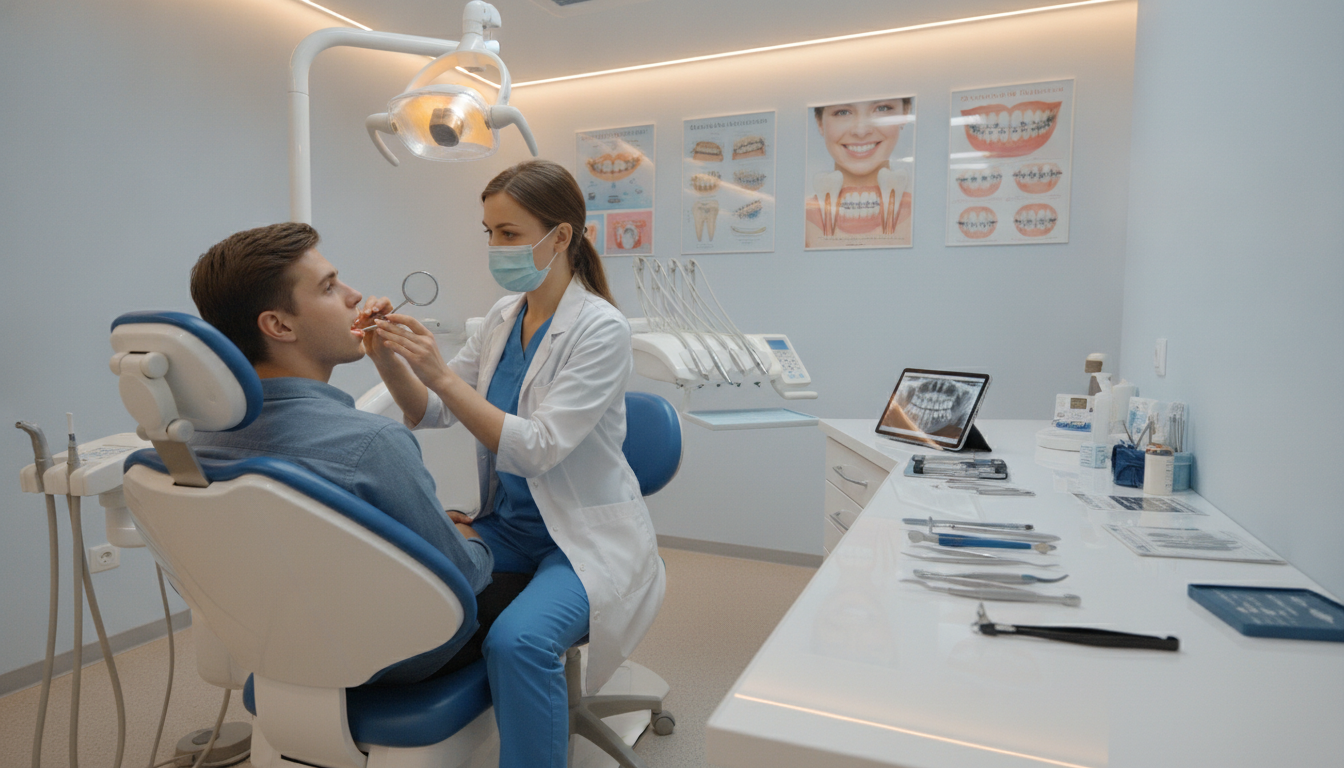
The initial assessment gives us the facts we need to map a personalised plan for healthier, straighter teeth.
Our orthodontist will examine your mouth and face—checking how your teeth meet and how your smile functions.
We often take digital models and x-rays so every stage of a treatment is guided by accurate clinical information. This data makes each decision clear and predictable.
Whether you are an adult or bringing in a child, we give calm, practical advice so you can make informed choices.
All dentists in our clinic work together to balance aesthetic goals with long-term function. We explain the full plan and timing, so you know what to expect and feel supported.
| Step | What we check | Why it matters |
|---|---|---|
| Exam | Face, mouth, bite | Shows functional and cosmetic needs |
| Digital records | Models and x-rays | Provides precise clinical information |
| Planning | Collaborative dentist review | Creates a clear, personalised treatment plan |
“We take time to explain every stage so you feel confident about your care.”
Exploring Different Types of Orthodontic Appliances
We help you compare common appliances so you can pick the best option for your smile with ease.
Traditional Metal Braces
Traditional metal braces remain a reliable choice for complex bite and alignment problems.
Fixed braces give tight control over tooth movement and work well where many teeth need adjustment.
Clear Aligners
Clear aligners offer a discreet way to straighten teeth for teens and adults.
They suit people who prefer removable, nearly invisible appliances and who can follow a daily wear plan.
Functional Appliances
Functional appliances guide the position of the upper and lower jaw during growth — often useful in a child.
These devices can reduce future complexity by correcting jaw growth early.
- We follow British Orthodontic Society guidance to keep each plan safe and effective.
- Fixed braces are ideal for complex orthodontic problems; aligners are great for milder cases.
- All appliances are fitted precisely to your mouth and tooth shape for comfort and results.
| Appliance | Best for | Key benefit |
|---|---|---|
| Metal braces | Complex alignment | Reliable, precise movement |
| Clear aligners | Mild to moderate crowding | Discrete, removable |
| Functional appliance | Growing children | Corrects upper/lower jaw position |
“Choosing the right appliance reduces time in active treatment and protects long-term gum and tooth health.”
Managing Treatment Duration and Retainer Wear
A clear timeline for care helps you balance appointments with everyday life. Knowing how long active care runs makes decisions easier and reduces worry.
Typical timeframes for orthodontic treatment range from about one to three years. Complexity of the case — crowding, bite issues or planned movement — affects how long you will be in braces or aligners.
Check-ups happen regularly; each visit usually lasts 30 to 60 minutes. These short appointments let your orthodontist track progress and make small adjustments to keep results on schedule.
The Importance of Retainers
After active treatment, a retainer is essential to keep teeth in their new position. Many people find that consistent retainer wear is the single most important step to protect hard-won results.
- Most patients finish active care in 1–3 years, depending on needs.
- Expect 30–60 minute check-ups to monitor movement and comfort.
- Wear a retainer as instructed to prevent relapse — this is non-negotiable for lasting success.
“Wearing your retainer regularly preserves the time and effort put into achieving a confident smile.”
We give clear instructions on caring for aligners retainers and answer questions at each visit so you feel confident about how and when to wear retainer devices.
Health Benefits and Potential Risks

Well-aligned teeth improve function and often prevent future dental problems. A correct bite reduces uneven wear and helps keep gums and enamel healthier over time.
Health benefits include easier cleaning, improved chewing and a more confident appearance. We monitor the upper and lower jaw closely to protect tooth position and overall mouth health.
Mild discomfort is common at the start of any treatment—whether with clear aligners or metal braces. Our team gives practical advice on care, pain relief and what to expect as teeth move.
Good oral hygiene is essential throughout the time in braces or aligners. Clean around brackets or appliance edges, floss carefully and attend check-ups to reduce risks to gum and tooth health.
We watch for possible risks and adjust plans if needed. By following our guidance on wear, retainer use and regular care, people of all ages can enjoy lasting, healthy results.
Why You Should Avoid DIY Orthodontics
Self-directed aligner plans miss important clinical reviews that protect your long-term mouth health. What begins as a low-cost idea can cause lasting harm to your gum, jaw and tooth roots.
We strongly advise against DIY approaches. A full assessment by a registered dentist or an experienced orthodontist must come first. That check finds hidden problems and sets a safe plan.
Many people who try direct-to-consumer aligners discover they did not get the regular check-ups needed to move teeth safely. Without those visits, small issues can become serious.
- Professional care protects gum and jaw health throughout treatment.
- Our clinic provides supervised reviews — something DIY kits cannot match.
- Trust a registered dentist to manage complex dental problems and retain long-term results.
“Attempting to straighten teeth without supervision can lead to permanent damage — seek expert advice before you start.”
For a clear explanation of the risks linked to home straightening kits, read our detailed guide on DIY aligner risks. We are here to help people and families make safe, informed choices.
Visit Our Parramatta Clinic for Professional Care
Visit our Parramatta clinic to meet our team and see how personalised care makes a real difference to your smile.
We invite you to visit us at 37 Grose St, Parramatta, NSW, 2150, Sydney, Australia. Our friendly staff will welcome you and explain options clearly.
- Book an initial consultation by calling us on 02 8036 2411.
- Our dedicated orthodontist is committed to quality service for the Parramatta community.
- We lead in modern orthodontics and personalise care in a relaxed, professional setting.
“Contact us today at 02 8036 2411 to start your journey toward a healthier, more confident smile.”
If you prefer, ask for a time that suits work or family life. We work with your schedule and partner with your dentist to support long-term oral health.
Conclusion
Simple, consistent steps deliver the best results for your smile and oral health, and we guide you at every stage.
Achieving straight teeth and a healthy bite improves function, appearance and long-term health. Follow your personalised treatment plan, attend check-ups and wear your retainer as advised to protect results.
We welcome questions about risks, care or timeframes — call us or visit Teeth.org.au for reliable information. For urgent support, the healthdirect helpline is available 24/7 on 1800 022 222.
We are here to support your mouth, gum and jaw health — trust a qualified dentist so crooked teeth are managed safely and predictably.