
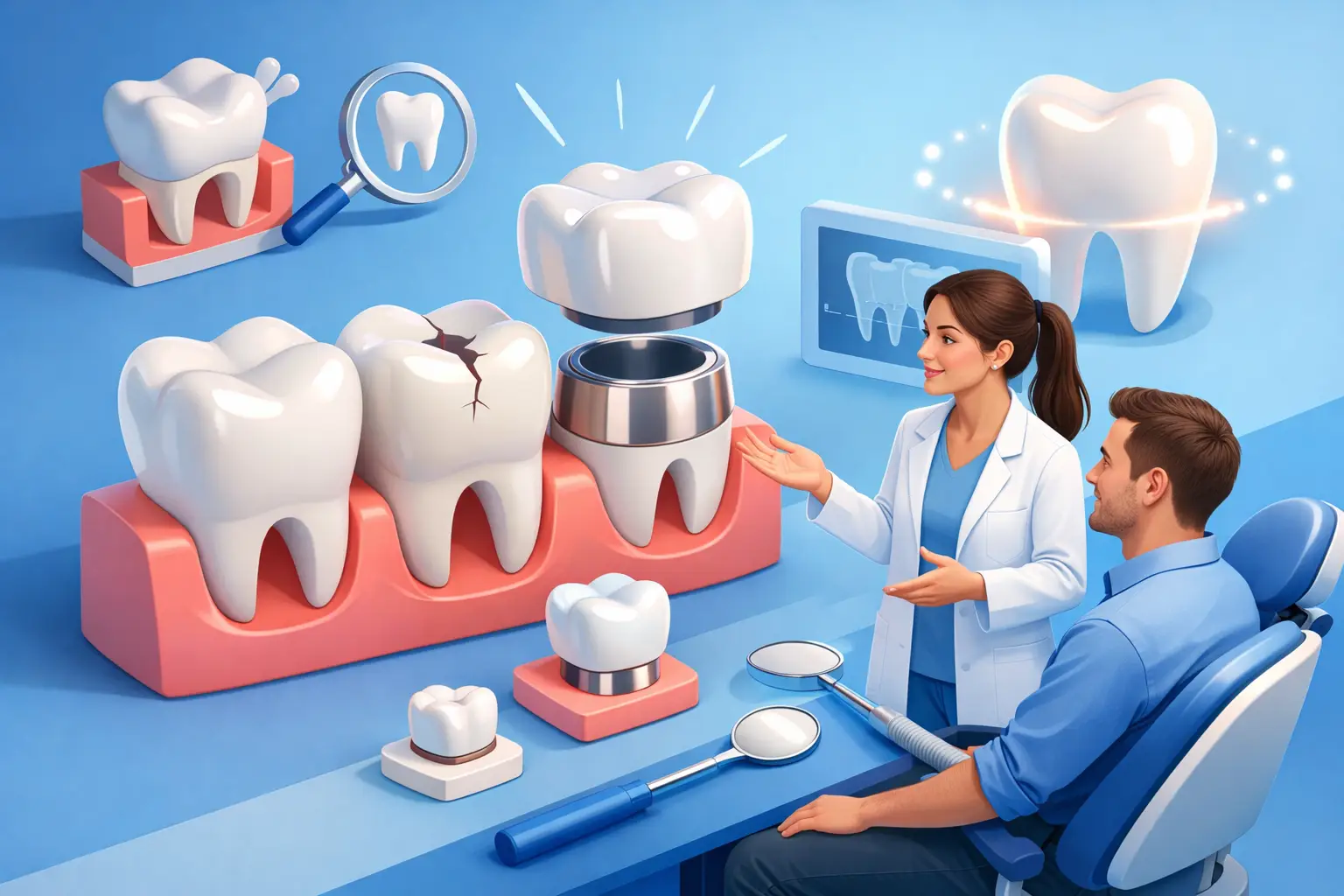
That moment usually starts with a crack, a deep filling, or a dentist saying your tooth is getting weaker. If you are asking, do I need a dental crown, the answer often comes down to one thing – can your natural tooth still do its job safely without extra protection?
A crown is not always the first option, and it is not suggested lightly. In many cases, a dentist will prefer to keep as much natural tooth structure as possible. But when a tooth is badly damaged, heavily filled, worn down or treated with root canal therapy, a crown can be the step that helps preserve it for the long term.
What a dental crown actually does
A dental crown is a custom-made cover that fits over a prepared tooth. It is designed to restore the tooth’s shape, strength and appearance while protecting what remains underneath.
Think of it as reinforcement rather than a cosmetic extra. Some crowns do improve the way a tooth looks, especially if it is discoloured or misshapen, but their main role is often functional. They help a weakened tooth cope with everyday biting and chewing forces without breaking further.
Do I need a dental crown or just a filling?
This is one of the most common questions in restorative dentistry, and the answer depends on how much healthy tooth structure is left.
A filling works well when damage is relatively small and the remaining tooth is strong enough to support itself. But once a tooth has a large cavity, a very big filling, a crack, or significant wear, another filling may not be enough. In that situation, the tooth can become more likely to split under pressure.
A crown covers and braces the tooth more completely. That extra coverage can reduce the risk of further damage and help the tooth last longer. So if you have already had the same tooth repaired more than once, or if a filling keeps failing, a crown may be the more predictable option.
Signs a crown may be recommended
There is no single symptom that means you definitely need a crown, but there are several situations where one is commonly advised.
The tooth has a large filling
When a tooth is mostly filling and only partly natural tooth, it may no longer be strong enough to handle normal forces. The larger the filling, the more likely the remaining tooth walls are to fracture.
The tooth is cracked or broken
Not every cracked tooth needs a crown, but many do. Small surface lines can be harmless, while deeper cracks can worsen over time. If a piece of tooth has broken off, or the crack affects the structure of the tooth, a crown may help hold it together and protect it from further splitting.
You have had root canal therapy
Teeth that have had root canal treatment are often more brittle than before, especially back teeth that absorb heavy chewing pressure. A crown is frequently recommended after root canal therapy to strengthen and protect the tooth.
The tooth is badly worn down
Grinding, clenching and acid wear can all reduce the height and strength of a tooth. If the damage is advanced, a crown may help rebuild function and prevent ongoing breakdown.
The tooth is weak after decay
Sometimes decay removes more tooth structure than patients expect. Even after the decay is cleaned away, there may not be enough healthy tooth left for a filling alone to be reliable.
You want to improve shape or appearance in specific cases
Crowns can also be used for aesthetic reasons, such as restoring a heavily damaged front tooth. That said, if the issue is mainly cosmetic and the tooth is otherwise healthy, there may be more conservative options.
When a crown might not be necessary
A good treatment plan is never about choosing the biggest procedure. If a smaller, more conservative option can do the job well, that is often the better path.
You may not need a crown if the damage is minor, the tooth can be restored well with a filling, or the crack is superficial and not compromising strength. In some cases, an inlay, onlay or veneer may be considered instead, depending on the tooth and the problem being treated.
This is why an examination matters so much. X-rays, photos and a close look at your bite can reveal whether the tooth is structurally sound or already at risk.
What happens if you delay a recommended crown?
Sometimes patients feel fine and wonder whether a crown can wait. In certain cases it can, but in others delaying treatment increases the chance of a larger problem.
A weak tooth may continue to function for months without pain, then suddenly fracture while eating something ordinary. If the break is limited, the tooth may still be restorable. If the crack extends too far, the tooth can become much harder to save.
That does not mean every recommended crown is urgent in the same way. Some are preventative, while others are more time-sensitive. The key is understanding what your dentist is seeing and what risks come with waiting.
What are the alternatives to a dental crown?
If you are unsure about a crown, it is reasonable to ask whether there are other options. Depending on the tooth, alternatives may include a filling, an onlay, an inlay or, for some front teeth, a veneer.
Each option has trade-offs. Fillings are more conservative but may not provide enough support for a weakened tooth. Onlays can be an excellent middle ground because they preserve more natural tooth than a full crown while still restoring damaged areas. Veneers can improve appearance, but they are not designed to solve every structural issue.
The right choice depends on where the tooth is, how much healthy structure remains, how you bite, and whether the main concern is strength, appearance or both.
Do I need a dental crown if my tooth does not hurt?
Possibly, yes. Pain is only one sign of trouble, and not all weakened teeth are painful.
A tooth can be heavily filled, cracked or structurally compromised without causing obvious symptoms. In fact, some of the teeth most likely to break are quiet right up until the moment they fail. That is why dentists often recommend crowns based on strength and prognosis, not just discomfort.
If your tooth is not hurting, that is a good thing. It may mean there is still time to protect it before a bigger issue develops.
What to expect if a crown is recommended
For many patients, the idea of a crown sounds more daunting than the process itself. In reality, the treatment is routine and carefully planned.
Your dentist will first assess whether the tooth can be predictably restored. If it can, the tooth is shaped to make room for the crown, and an impression or digital scan is taken so the final crown can be custom-made. A temporary crown is often placed while the final one is being made.
At the fitting appointment, the permanent crown is checked for comfort, bite and appearance before it is bonded into place. The goal is for it to feel secure, natural and easy to chew with.
If you are anxious about dental treatment, let your dental team know early. Clear explanations and a calm, supportive approach can make a big difference to the experience.
How dentists decide whether a crown is the best option
This decision is based on more than one factor. Your dentist will look at how much tooth is left, whether there are cracks, how the tooth bites against the opposing teeth, whether you grind or clench, and how long a simpler restoration is likely to last.
Long-term predictability matters. A filling that is cheaper in tooth structure today is not always the more conservative option if it fails quickly and leads to repeated repairs. Sometimes a crown is recommended because it offers a better chance of keeping the tooth healthy and functional over time.
That said, there is room for discussion. Good dental care should feel collaborative. You should understand why a crown is being suggested, what the alternatives are, and what could happen if you decide to wait.
A practical way to think about it
If your tooth is strong enough to function safely with a simpler restoration, a crown may not be necessary. If the tooth is already weakened and at real risk of breaking, a crown is often the treatment that protects it rather than over-treats it.
At My Smile Doctors, these conversations are centred on clarity and comfort, so you can make a decision with confidence instead of guesswork. If you have been told you may need a crown, the most helpful next step is not to assume the worst – it is to have the tooth properly assessed and understand what will best protect your smile from here.