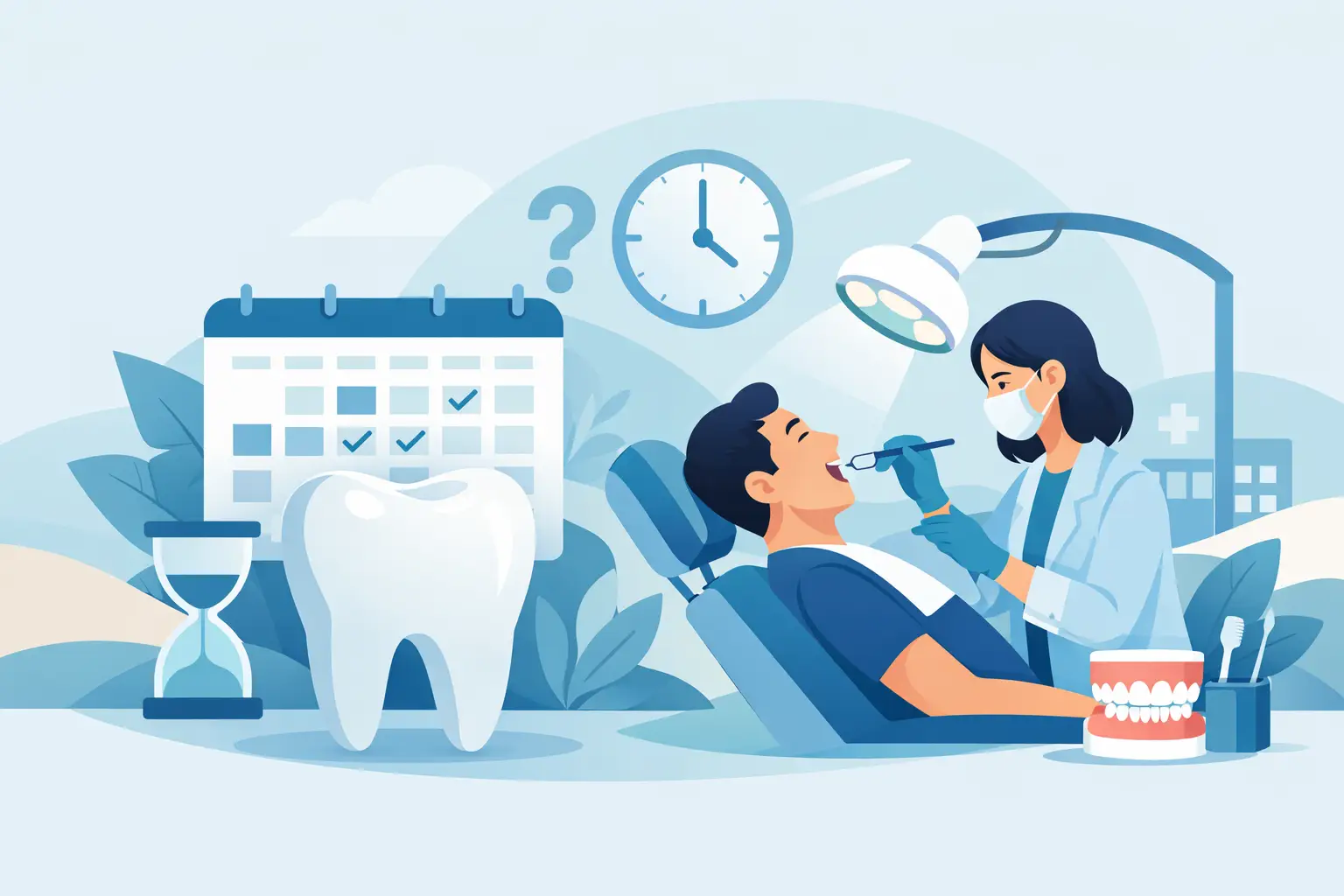
If it’s been a while since your last check-up, you’re not alone. One of the most common questions patients ask is how often should you get a dental check up – and the honest answer is that it depends on your mouth, your health, and your risk of future problems.
The old rule of thumb is every six months, and for many people that’s still a sensible baseline. But dental care is not one-size-fits-all. Some patients benefit from check-ups every three to four months, while others with very stable oral health may be advised to come in less often. The right timing is the one that helps prevent problems early, rather than waiting until something hurts.
How often should you get a dental check up for most people?
For most adults and children, a dental check-up every six months is a good starting point. It gives your dentist regular opportunities to look for early tooth decay, monitor gum health, check existing fillings or crowns, and pick up changes that may not be obvious to you at home.
That timing also works well because many dental problems develop quietly. Gum disease can progress with very little pain. Small cavities can stay unnoticed until they become bigger and more expensive to treat. A six-month interval often allows issues to be spotted while they are still easier to manage.
Just as importantly, regular visits help keep your preventive care on track. A professional clean removes hardened plaque that brushing and flossing cannot shift on their own. Your appointment is also a chance to review brushing technique, discuss sensitivity, and talk through anything unusual, whether that’s bleeding gums, jaw tension, bad breath, or wear from grinding.
Why the six-month rule is not always the whole story
The six-month schedule is useful, but it is not a law of dentistry. It is better to think of it as a common recommendation rather than a fixed deadline for everyone.
If your teeth and gums have been healthy for years, you have low decay risk, and you keep up excellent home care, your dentist may suggest a longer interval between full check-ups. On the other hand, if you are prone to plaque build-up, have active gum disease, wear braces or aligners, or tend to develop cavities easily, more frequent visits may be the safer option.
This is where personalised care matters. A good check-up schedule should reflect your history, not just a general rule. That approach is often more practical for busy families and professionals too, because it focuses on what your mouth actually needs instead of treating everyone the same.
When you may need dental check-ups more often
Some patients are at higher risk of dental disease and benefit from shorter gaps between appointments. If that sounds like you, coming in more often is not a sign you are doing something wrong. It usually means your dentist is trying to protect your teeth and gums before small problems become larger ones.
You may need more frequent reviews if you have gum disease, a history of repeated decay, dry mouth, diabetes, smoking or vaping habits, pregnancy-related gum changes, or a lot of dental work that needs monitoring. Children with deep grooves in their teeth, orthodontic appliances, or inconsistent brushing may also need closer follow-up.
Patients who feel anxious about treatment sometimes do better with more regular visits as well. Shorter, routine appointments can make dental care feel more familiar and far less stressful than waiting until an emergency forces the issue.
Signs your current check-up schedule may be too far apart
Even if you usually aim for six-month visits, life can get busy. Work deadlines, school commitments, family logistics, and plain old procrastination can all get in the way. The problem is that your mouth does not pause while your calendar fills up.
If you notice bleeding when brushing, ongoing bad breath, food trapping, sensitivity to cold or sweets, a chipped tooth, sore gums, jaw discomfort, or a filling that feels rough or loose, it’s worth booking sooner rather than later. These signs do not always mean something serious, but they do mean your mouth is asking for attention.
It is also wise to come in earlier if you have had a long gap since your last visit. When more than a year has passed, the chance of silent issues increases. Getting checked does not just give you answers – it often gives you more straightforward treatment options.
How often should you get a dental check up if you have gum disease?
If you have gum disease, the timing is usually different from a standard six-month recall. Many patients with active gum inflammation or a history of periodontal problems need maintenance visits every three to four months.
That is because harmful bacteria can re-establish below the gumline fairly quickly, especially in areas that are hard to clean at home. More frequent reviews and cleans help control inflammation, reduce the risk of bone loss, and protect the teeth over time.
This kind of schedule can feel like a bigger commitment at first, but it is often the most cost-effective path in the long run. Managing gum disease early is far simpler than dealing with loose teeth, discomfort, or advanced restorative treatment later.
Children, teens and older adults may all need different timing
A child’s check-up pattern may look different from an adult’s, especially when teeth are developing quickly. Regular reviews help monitor how baby teeth are being lost, whether adult teeth are coming through properly, and whether there are early signs of decay or orthodontic concerns.
Teenagers can be a mixed picture. Some have excellent oral health, while others are navigating braces, sports injuries, sugary drinks, and less-than-perfect brushing habits. For them, check-up timing should reflect what is happening in real life, not what should be happening in theory.
Older adults may also need closer monitoring, particularly if they take medications that cause dry mouth, have gum recession, wear dentures, or have crowns, bridges, and implants that need ongoing review. As the mouth changes with age, prevention often becomes even more important, not less.
What happens at a dental check-up and why it matters
A proper check-up is more than a quick glance at your teeth. Your dentist will assess the health of your teeth, gums, bite, and soft tissues, and may recommend X-rays when needed to look for problems that are hidden between teeth or below the surface.
This is also the time to check existing dental work, track any wear from clenching or grinding, and discuss symptoms you may have been putting up with. Sometimes patients normalise things like sensitivity or bleeding gums because they have lived with them for so long. A check-up helps separate what is common from what is actually healthy.
When paired with a professional clean, these visits can make a real difference to your long-term dental costs and comfort. Preventive care is usually simpler, gentler, and more affordable than waiting for a problem to announce itself with pain.
So, what is the right schedule for you?
If you are wondering how often should you get a dental check up, the most accurate answer is this: often enough to keep small problems small. For many people that means every six months. For others, especially those with higher risk, it may mean every three to four months. And for a small group with very stable oral health, it may be slightly longer.
What matters most is not guessing. A personalised recommendation based on your dental history, gum health, lifestyle, and current risk factors will always be more useful than a general rule online.
At My Smile Doctors, that conversation is part of helping patients feel informed, comfortable, and confident in their care. If your next check-up is overdue, a simple appointment now can save you from a much bigger interruption later.
A healthy smile is usually maintained in the quiet, routine moments – not the emergency ones.