
We know that changes around your teeth and gums can cause worry. Our team offers gentle, evidence-based care in a calm, welcoming setting to help you feel supported every step of the way. For personalised advice, please call 02 8036 2411.
We prioritise comfort and clear communication — explaining options and listening to your concerns. Our approach combines modern techniques with a nurturing touch, so you can relax while we protect your oral health.
Making an appointment is easy. Ring 02 8036 2411 to speak with our friendly team, arrange a consultation and take the first step towards healthier teeth and supportive care.
Key Takeaways
- We provide compassionate, evidence-based care in a calm environment.
- Phone 02 8036 2411 to discuss your oral health needs.
- Our team focuses on comfort and clear communication throughout care.
- We aim to protect your teeth and support healthy gums with modern methods.
- Booking a consult is the first step to restoring and maintaining oral health.
Understanding the Basics of Gum Disease
Understanding how inflammation starts helps you take simple, practical steps to protect your oral health. We explain the common early changes so you can act quickly and with confidence.
What is Gingivitis
Gingivitis is the mild form of gum disease that often appears when plaque builds up along the gumline. This sticky film of bacteria irritates the gums and causes redness, swelling and bleeding.
Simple habits — like regular brushing twice daily — reduce plaque and cut the inflammation that marks this early stage. If you notice bleeding while brushing, consult a dental professional for advice.
The Progression to Periodontitis
Left unchecked, infection can progress into periodontitis. Bacteria and chronic inflammation can damage the bone and connective tissues that hold your teeth in place.
Over time, this loss of support may cause teeth to loosen. In Australia, about three in ten adults have moderate to severe periodontitis, so early attention is important.
- Key point: Early signs are common but reversible.
- Key point: Timely care helps protect teeth and surrounding bone.
Recognising the Early Signs of Periodontal Issues
Small shifts — like bleeding when you brush or a persistent bad smell — can signal a problem. These early signs help you act before deeper harm occurs.
Look for redness, swelling and bleeding when you brush or floss. Persistent bad breath and a sore, tender mouth are common symptoms we see in clinic.
Receding gums may expose the root surface of a tooth, causing sensitivity to cold or sweet foods. That sensitivity is a clear symptom of advancing issues.
Periodontitis can create pockets between your teeth and gums. These spaces trap bacteria and make cleaning harder at home.
- Watch for loose teeth or shifting bites: this suggests the disease has weakened bone support and needs prompt attention.
- Early detection matters: recognising signs and symptoms early lets us help protect your teeth and restore comfort.
We encourage regular checks and to call us if you notice any worrying signs — early care makes a big difference.
Why Professional Gum Disease Treatment is Essential
Timely intervention by a skilled clinician can reverse early signs and prevent lasting bone loss. Early-stage gingivitis is often reversible with prompt professional attention. If left untreated, the problem can advance to periodontitis and wider infection.
The Importance of Early Intervention
Only a qualified dentist can remove hardened plaque — tartar or calculus — that home cleaning cannot shift. Removing this build-up stops bacteria and chronic inflammation from damaging the tissues that support your teeth.
Early care protects bone and reduces the risk of permanent loss. It also lowers the chance of chronic inflammation affecting your general health.
“Seeking professional care early is the single most effective step to halt progression and preserve oral health.”
| Stage | What we do | Outcome |
|---|---|---|
| Gingivitis | Professional cleaning, advice on daily care | Reversal and restored comfort |
| Early periodontitis | Deep cleaning, focused removal of plaque and bacteria | Stabilised support and halted progression |
| Advanced stage | Comprehensive care plan with specialist input | Managed infection and protection of remaining teeth |
Key points:
- Seek professional care early to stop progression of this destructive problem.
- When gingivitis is left untreated, it can evolve into periodontitis and cause irreversible bone loss.
- Our dentist uses modern techniques to remove plaque and bacteria and restore stable oral health.
Learn more about our approach to gum disease treatment and book a consultation so we can protect your smile and overall wellbeing.
Common Risk Factors for Oral Health Decline
Some common lifestyle choices and medical conditions make people more vulnerable to oral health decline.
We see several clear risk factors that raise the chance of gum disease and wider oral problems.
Smoking is one of the biggest. It reduces blood flow and makes it harder for the mouth to fight infection.
People with diabetes often face worse outcomes. High blood sugar weakens the immune response and speeds progression.
- Daily brushing and flossing stop plaque from hardening into tartar — which only a clinician removes.
- Medications or conditions that cause a dry mouth increase risk by allowing bacteria to flourish.
- Poor nutrition, stress and family history also raise the overall risk of damage to teeth and bone.
| Risk factor | How it raises risk | What we do |
|---|---|---|
| Smoking | Impairs healing and blood flow | Personalised quitting support and monitoring |
| Diabetes | Weakened immune response | Coordinate with your GP for blood sugar control |
| Dry mouth & meds | Less saliva to clear bacteria | Advice on saliva substitutes and home care |
Our approach is to assess each person’s risks and make a practical plan to protect long‑term health.
Diagnostic Procedures at Our Parramatta Clinic
A clear diagnosis starts with questions about symptoms and a thorough check of your teeth and gums. Our dental professional will take a focused history and perform a careful clinical exam to map the extent of any gum disease.
We use digital X‑rays to measure bone support around each tooth. These images help our dentist see hidden loss that may signal progressing periodontal disease.
Specialised probes and instruments locate plaque and tartar beneath the gum line. Swabs or tests may identify the bacteria that drive inflammation so we can plan the most effective cleaning.
- Detailed mouth exam: visual and tactile checks of teeth and gums.
- Digital X‑rays: assess bone levels and support.
- Sub‑gingival detection: find hidden plaque, tartar and bacterial hotspots.
| Tool | Purpose | Outcome |
|---|---|---|
| Clinical exam | Map affected areas | Tailored plan |
| Digital X‑ray | Check bone support | Accurate staging |
| Probe & tests | Detect plaque and bacteria | Targeted cleaning |
Our aim is clear: deliver a comprehensive diagnosis so you understand your oral health and the next steps. We explain findings in plain language and answer any questions you have.
Non-Surgical Approaches to Restoring Gum Health
Non-surgical care focuses on removing the causes of inflammation so your mouth can heal without invasive procedures.
Scaling and Root Planing
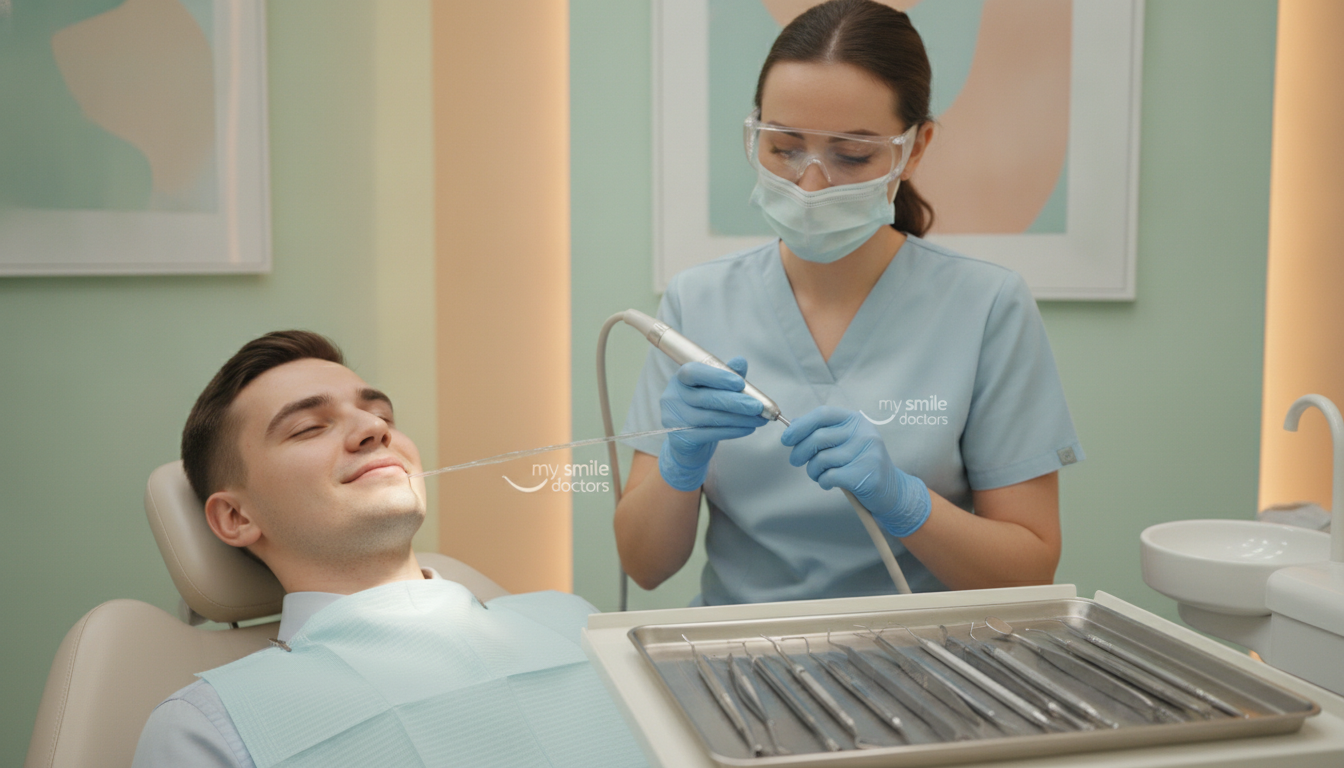
Scaling and root planing is a deep cleaning that removes plaque and hardened tartar from above and below the gum line.
Root planing smooths rough root surfaces, making it harder for bacteria to reattach. This helps the tissues re‑bond to the root and lowers pocket depth.
Antibiotic Therapy
When infection persists, we may prescribe targeted antibiotic therapy alongside cleaning.
These medicines support the mechanical cleaning by reducing bacterial load and speeding recovery.
Benefits of Deep Cleaning
Deep cleaning is a highly effective non‑surgical option to reduce pocket depth and inflammation.
Benefits include:
- Reduced bleeding and swelling for a healthier gum line.
- Improved support for teeth and a lower risk of bone loss.
- Longer‑lasting results when combined with regular professional cleaning and good home care.
Our dental professional team performs each step with precision and care so you feel comfortable and supported throughout the process.
Advanced Surgical Options for Severe Cases
Advanced procedures give us direct access to remove bacteria and rebuild the structures that hold your teeth.
When non‑surgical care is not enough, we offer focused surgical steps to control infection and protect remaining bone and tissues.
Flap surgery lifts the gum back so our dentist can clear plaque, tartar and bacteria from deep pockets and the root surface. This allows better cleaning where pockets hide infection.
Bone grafts support the body to restore lost bone. We use material from the patient or a donor to rebuild the foundation that keeps teeth stable.
Soft tissue grafts cover exposed roots, reduce sensitivity and protect against further damage. Guided tissue regeneration places a barrier to let bone and new tissues grow in the right place.
- Our aim is to control periodontitis and slow loss of support around teeth.
- We plan surgery only when it will improve long‑term outcomes and reduce future risk.
For more on specialised care, ask about our approach to advanced periodontal surgery and how we protect your smile.
Post-Treatment Care and Recovery Tips
Your role after clinic care is vital — consistent oral hygiene supports long-term recovery.
We provide clear, practical steps so your mouth heals comfortably and the risk of repeat problems stays low.
Maintaining Oral Hygiene at Home
Daily brushing and gentle flossing are the most important habits to protect your results. Aim for twice-daily brushing and once-daily flossing to remove plaque that can re‑accumulate in pockets.
Most people return to normal activities quickly after scaling and root planing. Mild discomfort or sensitivity may last a few days, and full healing can take several weeks.
If you notice persistent bleeding, unusual symptoms or rising discomfort, contact our office so we can advise further and check for infection.
“Consistent home care after professional cleaning keeps teeth stable and supports bone and soft tissue healing.”
| What to do | Why it helps | When to call us |
|---|---|---|
| Brush twice daily with a soft brush | Removes plaque and soothes healing gums | If bleeding continues beyond one week |
| Floss gently each day | Prevents debris in cleaned pockets | If you have increasing pain or swelling |
| Use recommended oral products | Supports healing and lowers infection risk | If symptoms worsen or new symptoms appear |
Our promise: we will give personalised aftercare advice and support so your oral health stays strong for the long term.
Visit Our Practice at 37 Grose St Parramatta
At 37 Grose St in Parramatta we combine practical expertise with a welcoming atmosphere to support your oral health.

Our modern clinic in Parramatta, NSW, 2150, Sydney, Australia, is easy to reach and designed for comfort. We are proud to serve the local community with high-quality dental care.
Call our professional team on 02 8036 2411 to book an assessment or arrange your next visit. Our experienced dental professional staff will listen, explain options and tailor a plan that suits you.
- Visit us at 37 Grose St, Parramatta, NSW, 2150 for expert periodontal support.
- Choose our clinic for reliable, compassionate care from a skilled dentist and team.
- Ring 02 8036 2411 to arrange an appointment and discuss ongoing maintenance or a specific treatment plan.
“We prioritise your comfort and long-term oral wellbeing at every step.”
We look forward to welcoming you and helping you keep a healthy, confident smile for years to come.
Conclusion
Prompt action can protect your teeth and the supporting bone from permanent loss. With timely care, both early gingivitis and advanced periodontitis can be managed so you keep a healthy smile.
Your mouth is linked to your wider health — regular checks reduce long‑term risk and help preserve tissues that hold your teeth in place.
By acting today you stop progression and lower the chance of future tooth loss. We are committed to guiding people through every step and keeping care comfortable.
To learn more about what to expect, read what to expect with gum disease or call us for personalised advice.
FAQ
What causes gingivitis and how do we spot it early?
Gingivitis is inflammation of the tissues that support your teeth, usually caused by plaque build-up along the gum line. Early signs include bleeding when you brush or floss, tenderness, and mild redness. We recommend seeing a dentist as soon as you notice these symptoms — early care often reverses the condition with professional cleaning and improved home hygiene.
How does gingivitis progress to periodontitis?
If left unchecked, persistent inflammation can destroy the fibres and bone that hold teeth in place, forming pockets around roots and causing recession and eventual tooth loss. Regular check-ups and prompt management of plaque and tartar reduce the risk of this progression.
What are the most common early signs of periodontal issues we should watch for?
Look for bleeding, swollen or receding gums, persistent bad breath, loose teeth or changes in how your teeth fit together. Sensitivity and pockets that trap food are also warning signs — contact our Parramatta clinic early so we can assess and help.
Why is professional care essential rather than just home cleaning?
Home brushing and flossing are vital but can’t remove hardened tartar beneath the gum line. Our professional cleanings access those areas, stop ongoing inflammation and prevent bone loss. Early intervention keeps treatment simple and more comfortable.
What risk factors increase the chance of oral health decline?
Smoking, uncontrolled diabetes, poor oral hygiene, some medications, genetic predisposition and stress raise risk. Lifestyle factors and systemic health are linked to mouth health, so we treat each person holistically and tailor care plans accordingly.
What diagnostic procedures do we use at our Parramatta clinic?
We perform a thorough oral exam, periodontal charting to measure pocket depths, digital x-rays to check bone levels, and review your medical history. These steps let us create an accurate, comfortable plan for restoring and protecting your mouth.
What is scaling and root planing, and when is it recommended?
Scaling and root planing is a deep-cleaning procedure that removes plaque and tartar from above and below the gum line and smooths root surfaces to help tissues reattach. We recommend it for moderate periodontal pockets to reduce inflammation and stop disease progression.
How do antibiotics fit into non-surgical care?
Local or oral antibiotics can help control bacterial infection alongside mechanical cleaning. We use them selectively, based on the severity and type of infection, to support healing while minimising systemic side effects.
What benefits can we expect from a deep clean?
Deep cleaning reduces pocket depth, decreases bleeding and tenderness, and lowers the bacterial load. Patients usually notice fresher breath, less sensitivity and improved gum health, especially when combined with diligent home care.
When are surgical options necessary for severe cases?
Surgery is considered when pockets are deep, bone loss is advanced, or regenerative procedures are needed to restore support. Our team discusses all options — aiming for the least invasive approach that achieves lasting results and comfort.
How should patients care for their mouth after procedures?
Follow-up care includes gentle brushing with a soft brush, daily flossing or interdental cleaning, using any prescribed rinses or antibiotics, and avoiding smoking. We provide clear, staged instructions and check-ups to support recovery.
How can we maintain oral hygiene at home to prevent recurrence?
Brush twice daily with fluoride toothpaste, floss daily, use interdental brushes if recommended, and attend regular professional cleans. Balanced nutrition, quitting smoking and controlling medical conditions like diabetes also protect oral health.
Where is your practice located and how do we book an appointment?
Our clinic is at 37 Grose St, Parramatta. Call 02 8036 2411 to arrange a consultation — we offer appointments designed to reduce anxiety and deliver gentle, high-quality care with advanced technology.