
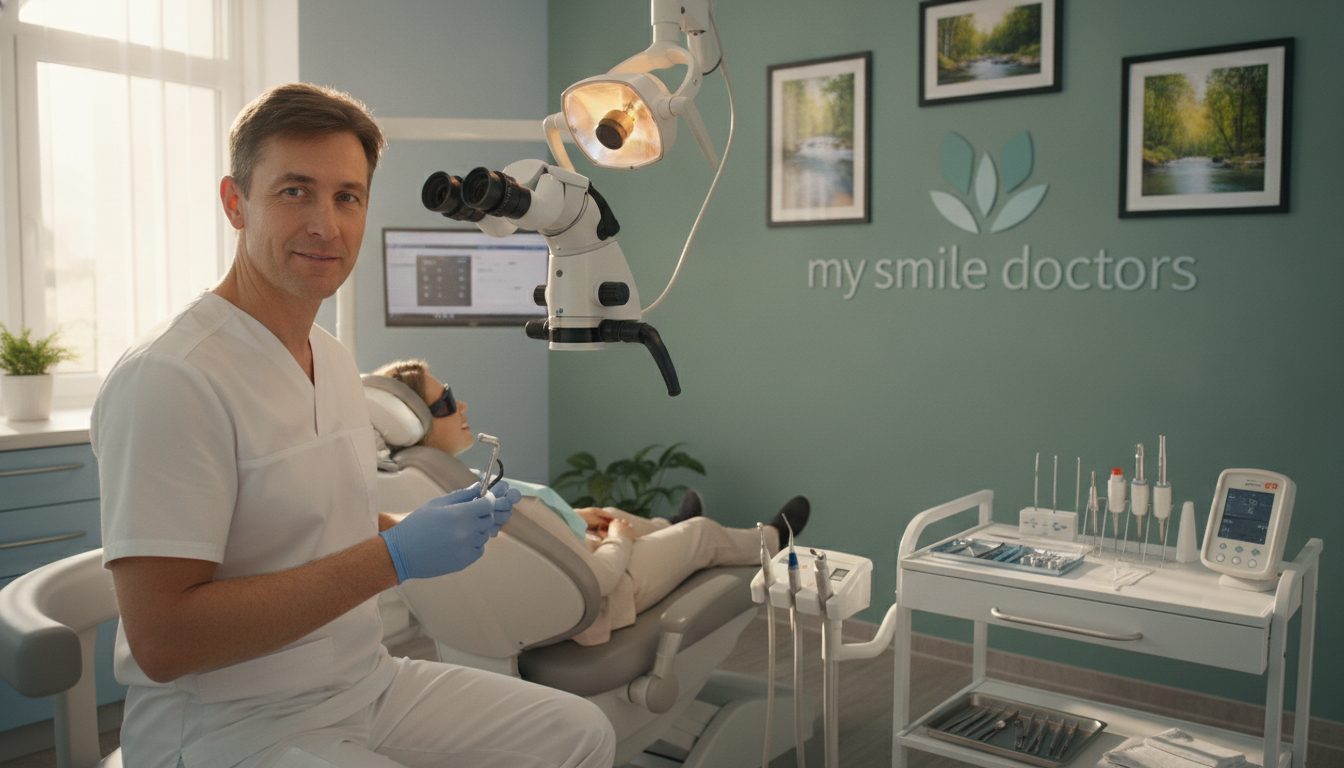
We provide gentle, expert care in Parramatta — and we know that needing a root canal treatment can feel worrying. Our team focuses on your comfort and uses modern methods to protect the long-term health of your tooth.
We explain each procedure in plain terms and make sure you feel supported every step of the way. Our priority is to stop pain, restore function and keep your smile healthy.
Our experienced dentist uses advanced tools for precise canal treatment and thorough cleaning of every root and canal. We aim for fast relief and lasting results — all delivered with warmth and respect in a calm clinic setting.
Key Takeaways
- We offer professional root canal therapy with patient comfort in mind.
- Treatment is designed to stop pain and restore your tooth’s function.
- Advanced equipment and skilled dentists ensure precise canal treatment.
- We focus on long-term oral health and supportive care for every patient.
- Our clinic provides clear explanations to reduce anxiety before the procedure.
Understanding the Purpose of Root Canal Therapy
This procedure removes infected or damaged tissue so your natural tooth can keep functioning. A root canal treatment clears infected pulp — the soft tissue inside the tooth made of nerves and blood vessels — to stop pain and avoid extraction.
Each tooth can have up to four tiny canals that house this pulp. Our dentist carefully cleans, disinfects and seals each canal to prevent further infection and to preserve the tooth’s role in chewing and speech.
By performing canal treatment we aim to remove infected pulp and restore the long‑term function of your natural tooth. This essential treatment removes infected material from inside the tooth and seals the space, helping to save tooth structure and protect overall oral health.
- Common outcome: relief from pain and avoidance of extraction.
- Focus: thorough cleaning of every root and canal for lasting results.
Common Symptoms Indicating You Need Treatment
If a tooth feels unusually sore for days, it can be a sign that the inner tissue is inflamed and needs checking. We encourage patients to trust persistent warning signs rather than wait.
Identifying Persistent Pain
Severe or ongoing pain that spreads to your jaw often means the infection has reached the tooth pulp and may need root canal treatment.
Sensitivity to hot or cold that lasts more than 30 seconds is a classic symptom that the pulp is irritated.
Recognizing Physical Signs of Infection
A pimple‑like bump on the gum — an abscess — is a clear sign an infection is present and requires prompt attention.
Visible swelling near your tooth or jaw, or a tooth that darkens in colour, suggests the infection might have spread beyond the root.
- Act early: delaying treatment can make care more complex and affect nearby teeth.
- See our dentist if you notice any of these signs — early treatment helps protect your smile and comfort.
The Science Behind Infected Pulp and Bacteria
When decay or a fracture lets bacteria in, the soft tissue inside a tooth becomes vulnerable to infection. The pulp chamber houses vital nerves and blood vessels, so once microbes reach this area the risk of pain and abscess rises quickly.
Bacteria can enter through untreated decay, cracks or trauma and travel down to the tooth root. Antibiotics help control spreading infection in surrounding tissues, but they cannot reach the sealed canals where bacteria hide.
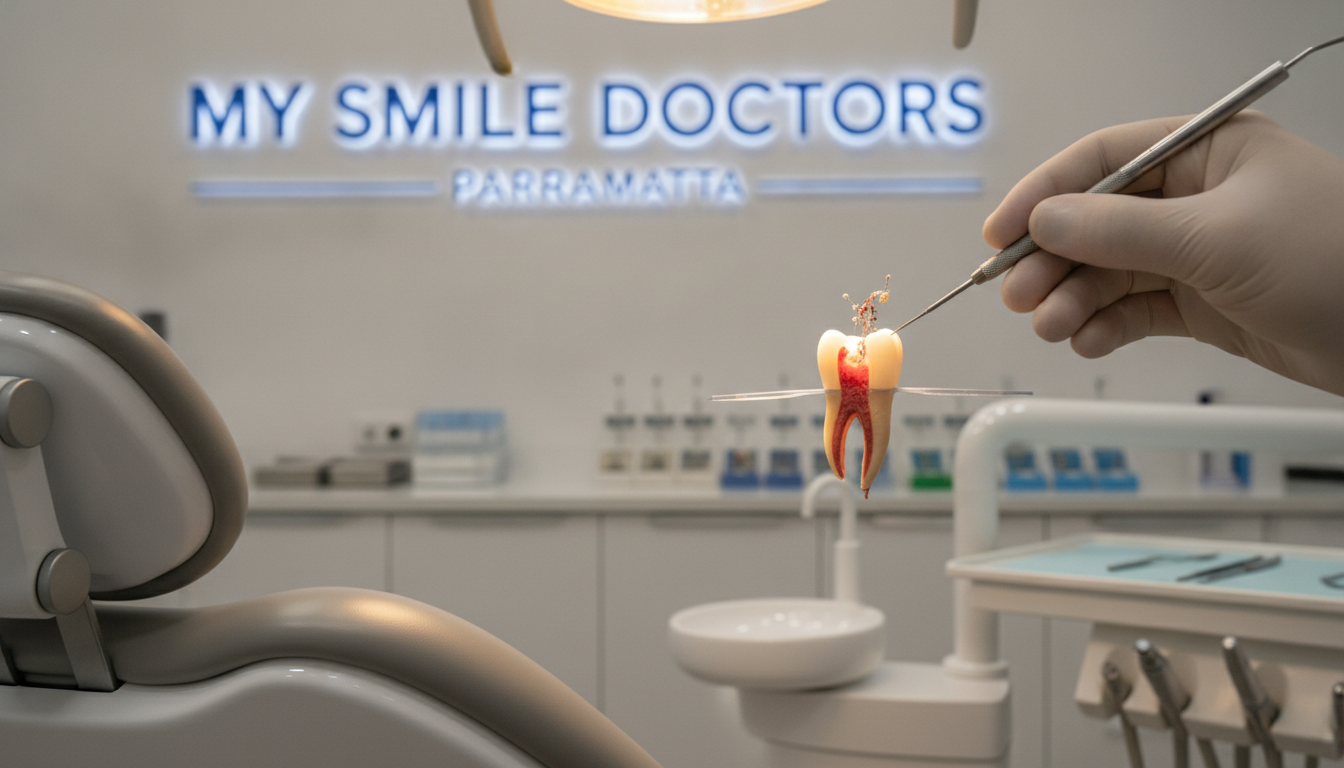
That is why our team focuses on physically removing infected pulp and cleaning each canal. By targeting the root and the canal system, we remove the source of infection and prevent further damage to the tooth.
- Key point: deep decay or a crack that reaches the pulp requires professional treatment.
- We thoroughly disinfect and seal canals to stop bacteria from returning.
- Early visit and treatment protect neighbouring teeth and preserve long‑term function.
For more on how we treat these infections, see our root canal treatment in Parramatta.
What to Expect During Your Root Canal Procedure
We begin with a calm, clear assessment so you know what will happen at your visit. Our team uses digital X-rays to map the tooth and plan care with confidence.
Initial Assessment and Imaging
We take a detailed X-ray and check the surrounding area. This shows the full root structure and any spread of infection. We discuss findings and the number of appointments you may need.
Cleaning and Disinfecting the Canals
We use local anaesthetic so the area is numb and comfortable. A rubber dam keeps the tooth dry while we remove infected pulp from inside the tooth.
Advanced instruments clean and disinfect each canal thoroughly to reduce the chance of future infection.
Sealing the Tooth
After cleaning, the canals are filled with a biocompatible material called gutta‑percha. This permanent filling helps seal the root and protect the tooth.
Most routine procedures last 60–90 minutes. We aim to complete care efficiently while keeping you relaxed and informed.
- Assessment: digital X-rays to view root anatomy.
- Anaesthesia: local numbness for a pain‑free procedure.
- Isolation: rubber dam keeps the area clean and dry.
- Sealing: gutta‑percha filling to prevent recurrence of infection.
| Step | What We Do | Typical Time |
|---|---|---|
| Assessment | Digital X-ray and exam | 10–15 min |
| Cleaning | Remove infected pulp and disinfect canals | 30–45 min |
| Sealing | Fill with gutta‑percha and place temporary or final filling | 20–30 min |
If you want more detail before your appointment, read this helpful guide — need a root canal — here’s what to.
Modern Technology and Comfort Measures
Modern equipment lets us work with great accuracy while keeping you calm and comfortable.
We use a surgical operating microscope with 25x magnification so the complex root anatomy is clear. This precision helps protect your tooth and the surrounding tissue.
Our clinic also uses quiet ultrasonic and laser instruments to clean the canal system. These tools cut noise and reduce the vibration that often causes anxiety.
“Advanced instruments make the procedure typically no more uncomfortable than a routine filling.”
We focus on minimal tissue trauma and high success rates. Gentle techniques reduce pain and speed recovery while safeguarding the pulp when possible.
- 25x magnification for detailed vision
- Ultrasonic and laser cleaning for gentler care
- Faster, more precise treatment with less discomfort
| Technology | Benefit | Patient Impact |
|---|---|---|
| Surgical operating microscope | High magnification and clarity | Better preservation of the root and tooth |
| Ultrasonic instruments | Thorough, gentle cleaning | Less noise and lower anxiety |
| Dental lasers | Precise disinfection | Reduced pain and faster healing |
Recovery and Aftercare for Your Treated Tooth
You can expect a short recovery period and gentle aftercare to protect the treated tooth. Most patients return to normal activities the next day with only mild soreness.
Managing Discomfort and Dietary Adjustments
Mild pain for 2–3 days is common as the area around your tooth heals. We recommend standard over‑the‑counter pain relief to keep you comfortable.
For the first 24 hours, stick to soft, cool foods and avoid chewing on the side of the mouth with the treated tooth. Hard, crunchy or sticky foods can disturb the temporary filling and the internal material while the area recovers.
- Expect mild soreness for 48–72 hours.
- Use simple pain relief as needed and follow dosage directions.
- A temporary filling is often placed — book a follow‑up to fit a permanent crown.
- Avoid hard foods until the final crown protects the tooth structure.
| Aftercare Step | Why It Helps | Timing |
|---|---|---|
| Pain relief | Controls soreness so you can rest and work | First 2–3 days |
| Soft diet | Prevents damage to the temporary filling and treated area | 24–72 hours |
| Follow-up crown | Restores strength and long‑term protection | Within a few weeks |
We provide clear aftercare instructions and are here to answer questions during recovery. With simple care, your tooth heals well and stays healthy for years to come.
Why Saving Your Natural Tooth Matters
A treated tooth that stays in place supports jaw bone and keeps your facial shape intact.
Preserving your natural tooth protects biting force — it feels stronger and more natural than a bridge or denture. That force helps you chew comfortably and keeps nearby teeth stable.
By removing the infected pulp and sealing the canal we stop further damage and often avoid extraction. With specialist care using a surgical microscope, a successful root canal procedure has a 94–96% long‑term success rate.
Keeping the tooth also preserves the small nerves and blood vessels inside tooth structure. These tissues help maintain oral function and sensing while preventing bone loss around the root.
We believe saving teeth is usually the best option for long‑term health and value. A crown and a careful filling protect the treated area so the tooth stays strong for years.
“Choosing to save your tooth supports your smile, comfort and long‑term oral health.”
Talk to our dentist about restorative options — see our restorative dentistry for more on protecting your natural tooth.
Risks of Delaying Necessary Dental Care
Small symptoms today — like lingering sensitivity or pressure — may signal a growing infection beneath the tooth. If left untreated, an infected pulp can cause chronic inflammation and damage the tissue that supports the tooth.
Delaying a needed root canal treatment can let bacteria spread. This increases the chance of an abscess and severe pain with facial swelling.
Facial swelling, fever or worsening pain are emergency signs. If you notice these, seek immediate care to avoid systemic infection that can affect your general health.
Ignoring sensitivity to hot or cold lets bacteria destroy tissue and bone around the tooth root. Over time, this damage can make tooth removal the only option.
- Early treatment helps stop infection and preserve the tooth.
- Persistent pain or swelling means you should contact us straight away.
- Prompt care reduces the risk of wider health problems and protects neighbouring teeth.
We prioritise fast, gentle treatment so you avoid complications and keep your mouth healthy.
Visit Our Parramatta Clinic for Expert Care
Drop by our Parramatta practice for a warm welcome and modern care designed to preserve your natural tooth. We combine gentle techniques and clear explanations so you feel confident at every stage.
Our Location and Contact Details
Address: 37 Grose St, Parramatta, NSW, 2150, Sydney, Australia.
Phone: Call us on 02 8036 2411 to speak with our friendly team.
Scheduling Your Appointment
We make booking easy — phone, online or in person — so you can arrange appointments that suit work and family life. Our staff will explain timing for assessment, treatment and follow‑up crown or filling visits.
We prioritise comfort and provide personalised care from first check to final restoration to protect oral health and keep teeth strong.
“Our aim is to save your natural tooth and keep your mouth healthy, with gentle care every step of the way.”
- Visit us for expert care and professional root canal treatment at our Parramatta address.
- Call 02 8036 2411 to book and discuss any questions before your visit.
- Our dentist offers a calm, comfortable environment for assessment and treatment.
- We plan each appointment to include assessment, cleaning, sealing and a follow‑up for crown or filling as needed.
- New patients and families are welcome — we respect your time and make scheduling simple.
| Service | What to Expect | Typical Timing |
|---|---|---|
| Initial Assessment | Phone booking, X‑rays and treatment plan | 15–30 minutes |
| Treatment Visit | Cleaning, disinfection and sealing of the canal system | 60–90 minutes |
| Restoration | Permanent filling or crown to restore chewing and protect the tooth | 30–60 minutes |
Conclusion
Acting early helps us treat infection efficiently and keep your natural tooth working well. A timely root canal procedure can often save tooth structure and end persistent pain.
Root canal therapy and root canal treatment are effective options that protect long‑term oral health. Our team performs each canal treatment with precision, comfort and attention to detail.
If you notice worrying symptoms, call our dentist to book appointments. We guide you through recovery so the treated tooth regains full function and your smile stays strong.
Prompt care prevents bacteria from causing more damage — and helps you avoid complex follow‑up work.
FAQ
What is the purpose of root canal treatment?
The aim of this procedure is to remove infected pulp inside a damaged tooth, eliminate bacteria and protect the remaining structure so you can keep your natural tooth and normal chewing function. We focus on relieving pain and preventing spread of infection while preserving your smile.
How do I know if I need treatment — what symptoms should I watch for?
Common signs include persistent tooth pain, heightened sensitivity to hot or cold that lingers, swelling around the gum or face, darkening of the tooth, or a recurring bad taste or discharge. If you notice any of these, contact us promptly for assessment.
What causes the pulp to become infected?
Infection usually follows deep decay, cracked or damaged teeth, or repeated dental work that lets bacteria reach the inner tissue. The pulp — which contains nerves, blood vessels and connective tissue — becomes inflamed and can form an abscess if untreated.
What happens during the procedure at our Parramatta clinic?
We begin with a careful assessment and digital imaging, then numb the area for comfort. The dentist cleans and disinfects the canals, removes infected material, and shapes the space. Finally, the canals are filled with a biocompatible material and the tooth is sealed — often followed by a crown to restore strength.
Will the treatment be painful?
Most patients report little to no pain during the procedure thanks to local anaesthetic. Mild discomfort can occur afterwards, which we manage with simple pain relief and cold packs. We tailor comfort measures to ease anxiety and keep you relaxed throughout.
How long does a typical appointment take and will I need more than one visit?
Many cases are completed in one appointment lasting about 60–90 minutes. Complex situations or infection control may require an extra visit. We explain the plan after assessment so you know what to expect and can schedule conveniently.
What aftercare is required to protect the treated tooth?
Avoid hard or sticky foods until the final restoration is in place, maintain good brushing and flossing, and attend follow-up visits so we can place a permanent crown if needed. Regular dental check-ups help us monitor healing and long-term function.
How soon will I feel normal again after treatment?
Most people feel much better within a few days. Tenderness around the treated area may persist briefly, but it gradually resolves. If swelling, severe pain or fever develops, contact us straight away.
Why is saving the natural tooth important instead of extracting it?
Keeping your natural tooth preserves chewing efficiency, bite alignment and jawbone health. Replacing an extracted tooth with an implant or bridge adds time, cost and maintenance. When feasible, treating and restoring the tooth provides the best long-term outcome.
What are the risks of delaying necessary dental care?
Putting off treatment can let infection spread, cause worsening pain, lead to abscess formation or systemic issues, and increase the chance the tooth cannot be saved. Early treatment is less invasive and offers higher success rates.
What modern technology and comfort measures do we use in Parramatta?
Our clinic uses digital imaging for precise diagnosis, sterilised rotary instruments for efficient cleaning, and effective anaesthetics plus calming techniques to reduce anxiety. We prioritise a comfortable, modern environment and clear communication throughout your care.
Where are you located and how do I book an appointment?
Our Parramatta practice is conveniently located with easy parking and public transport access. Call our reception or use the online booking on our website to arrange an assessment. We offer flexible times to suit busy professionals and families.
Can a treated tooth need further work after the initial procedure?
Occasionally a treated tooth may require retreatment if a new infection develops or if the restoration fails. Regular reviews and prompt attention to new symptoms help us protect the longevity of the treated tooth.