
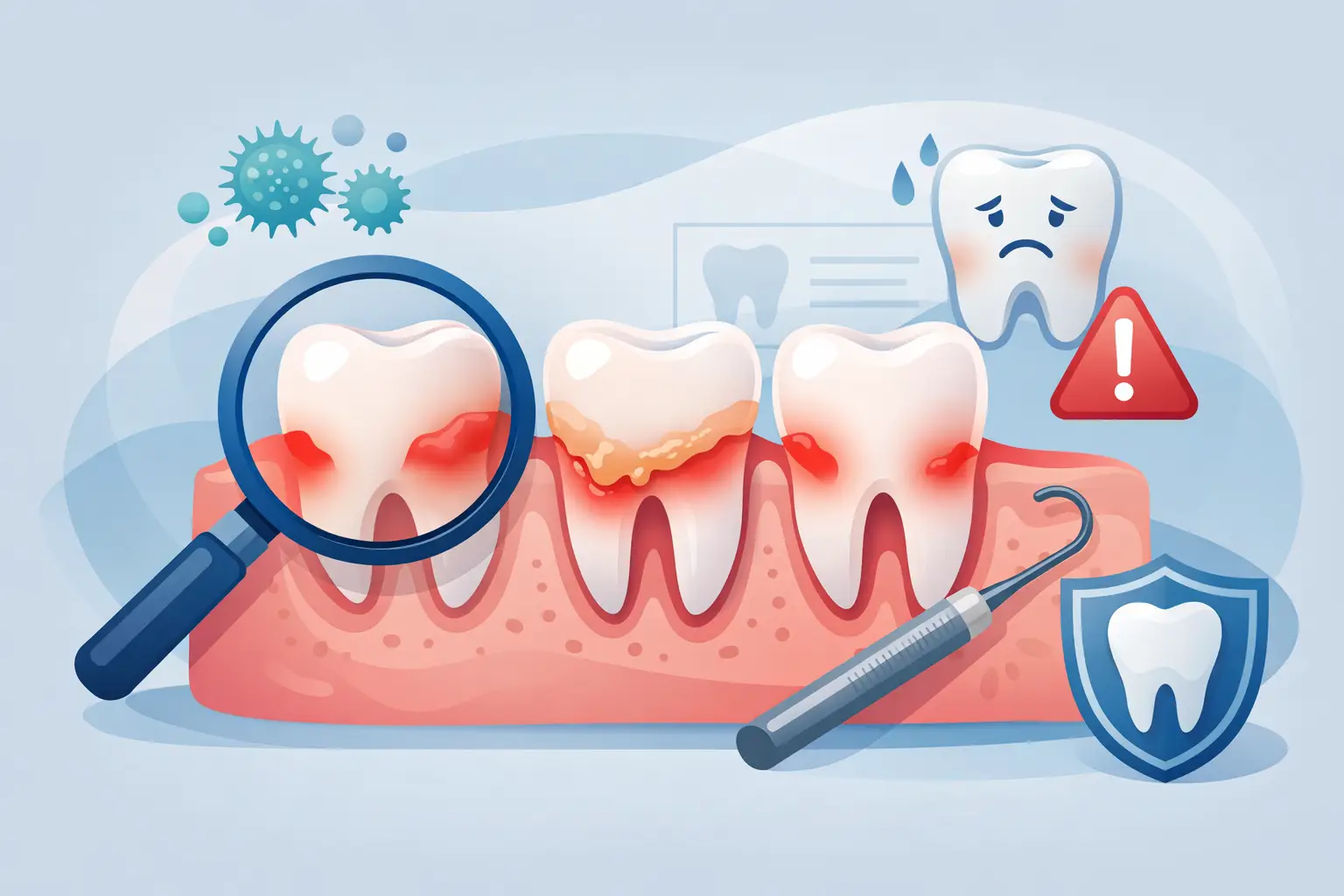
You spit into the sink after brushing and notice a streak of pink. It is easy to dismiss once, especially when mornings are rushed, but small changes like this are often how the early signs of gum disease first show up. The challenge is that gum disease usually begins quietly, with symptoms mild enough to ignore until the problem is more advanced.
Gum disease starts in the tissues that support your teeth. In its earliest stage, called gingivitis, the gums become irritated by plaque building up around the gumline. At this point, the condition is usually reversible with the right care. Left alone, though, it can progress to periodontitis, which can damage the bone and connective tissues that keep teeth stable.
For many adults and parents juggling work, school runs and everything else life throws at them, gum problems do not always feel urgent. They may not be painful, and your teeth can still seem fine. That is exactly why understanding the warning signs matters.
What are the early signs of gum disease?
The most common early sign is bleeding when you brush or floss. Healthy gums do not usually bleed from normal cleaning, so repeated bleeding deserves attention. Some people assume they just brushed too hard, but if it keeps happening, it is worth taking seriously.
Another early change is redness or puffiness along the gumline. Healthy gums tend to look firm and pale pink, although natural colour can vary from person to person. When gums look swollen, shiny or more inflamed than usual, it often suggests irritation is building.
Bad breath that lingers despite brushing can also be one of the early signs of gum disease. This happens because bacteria and plaque collect around the teeth and beneath the gumline, creating an ongoing source of odour. A mint or mouthwash may mask it for a while, but it will not address the cause.
Tenderness is another clue. Your gums may feel sore when brushing, flossing or eating certain foods, even if there is no severe pain. Some people also notice their gums starting to pull back slightly, making teeth look longer than before.
Why these early symptoms are so easy to ignore
Gum disease rarely begins with dramatic pain. That is one reason people put it in the mental category of something to deal with later. If you can still eat, work and get through the day, it is tempting to assume it is minor.
The other issue is that symptoms can come and go. Bleeding may happen for a few days, then seem to settle. Swelling can be subtle. Bad breath is hard to judge on your own. When signs are inconsistent, it is easy to talk yourself out of concern.
There is also confusion about what is normal. Many people grow up thinking bleeding during flossing is expected, especially if they have not flossed in a while. In reality, bleeding is a sign that the gums are inflamed. It may improve with better cleaning, but that does not make it harmless.
What causes gum disease in the first place?
Plaque is the main culprit. This soft film of bacteria forms on teeth every day, and if it is not removed well enough, it irritates the gums. Over time, plaque can harden into tartar, which cannot be brushed away at home and gives bacteria an even better surface to cling to.
Poor brushing or inconsistent flossing are common factors, but they are not the whole story. Gum disease can also be influenced by smoking, stress, hormonal changes, certain medications, dry mouth and health conditions such as diabetes. Some people are simply more prone to it than others, even when they make a reasonable effort with oral hygiene.
That is why gum health is not about blame. It is about noticing patterns early and responding before more complex treatment becomes necessary.
Early signs of gum disease vs occasional irritation
Not every sore gum means disease. If you jab your gum with a hard corn chip or brush too aggressively for a day, you might notice local irritation that settles quickly. The difference is persistence and pattern.
If the same areas bleed often, if the whole gumline looks inflamed, or if bad breath and tenderness keep returning, that points more towards a gum health issue than a one-off injury. The same applies if flossing always causes bleeding rather than occasional discomfort when you have been out of routine.
This is where a professional check-up helps. It takes the guesswork out. A dentist can look for plaque build-up, measure gum health, and tell the difference between mild gingivitis and something more advanced.
What happens if you leave it untreated?
In the early stage, gum disease affects the surface tissues. At that point, treatment is often straightforward and focused on thorough cleaning and improved home care. Once it progresses deeper, the stakes change.
Advanced gum disease can lead to gum recession, loose teeth, bone loss and, in serious cases, tooth loss. It can also make routine dental treatment more complicated because the supporting structures around the teeth are no longer as healthy or stable.
There is also the everyday impact. Sore gums, bleeding, unpleasant breath and sensitivity can affect confidence, comfort and willingness to smile. For many patients, that quality-of-life side matters just as much as the clinical one.
What to do if you notice the signs
Start with the basics, but do not stop there. Brush gently twice a day with a soft-bristled toothbrush, clean between your teeth daily, and pay attention to whether bleeding improves or continues. Good technique matters more than brushing harder.
If symptoms have been present for more than a week or two, or if they are getting worse, book a dental check-up. Professional cleaning removes hardened deposits that home care cannot reach, and early treatment can prevent more extensive problems later on.
If you are feeling nervous about being told off, you are not alone. Many adults delay appointments for that reason. A good dental team will focus on helping, not judging. Clear explanations and a practical treatment plan usually make the situation feel much more manageable.
How gum disease is usually treated early
When caught early, treatment often begins with a professional scale and clean to remove plaque and tartar around the gumline. Your dentist may also show you areas you are missing at home and suggest small adjustments to your brushing or flossing technique.
Sometimes a review appointment is recommended to check how the gums respond once the inflammation has had time to settle. If deeper pockets or signs of progression are found, treatment may need to be more involved. It really depends on how long the disease has been active and how much support the teeth have already lost.
The encouraging part is that early intervention gives you more options and usually a simpler path forward.
How to lower your risk long term
Consistency beats intensity. A careful daily routine and regular dental visits are far more effective than trying to overcorrect once symptoms appear. If you smoke, reducing or quitting can make a major difference to gum health. Managing dry mouth, controlling medical conditions and keeping up with professional cleans also help.
For busy families, the most realistic strategy is often the best one – a routine you can actually stick to. That may mean brushing before school drop-off, flossing while winding down at night, or scheduling check-ups ahead of time so they do not slip down the list.
At My Smile Doctors, we often see patients who are relieved to learn that bleeding gums are not something they have to simply put up with. In many cases, the problem can be turned around with timely care and a clear plan.
If your gums have been bleeding, feeling tender or looking different lately, trust that nudge rather than waiting for pain. The early signs are usually the easiest time to act, and your future smile will thank you for it.