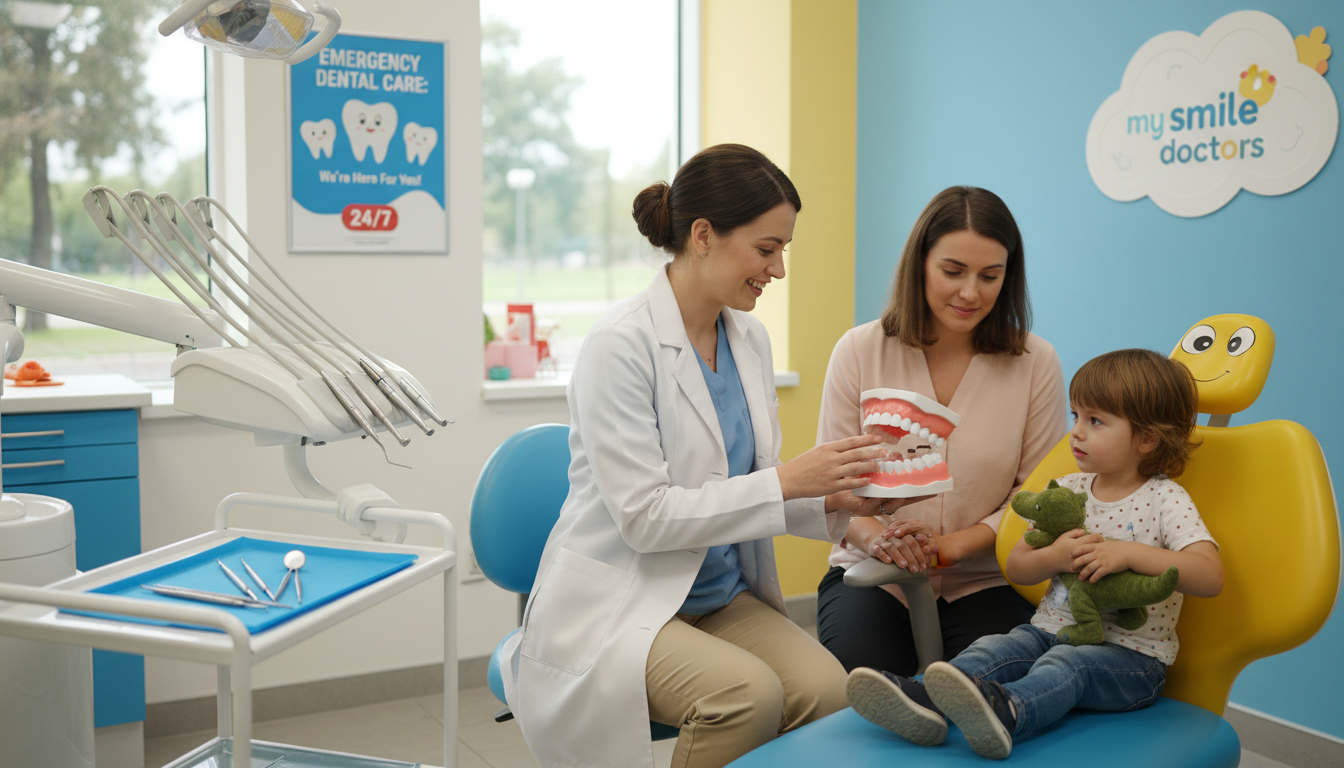
We’re here to help your family when a sudden mouth issue arises. Our clinic at 37 Grose St, Parramatta, NSW, Sydney, Australia offers prompt attention and calm support so parents can relax while we work.
Call 02 8036 2411 and our team will guide you straight away — from simple fixes to urgent treatment during regular hours.
We blend professional expertise with a gentle approach, protecting tiny teeth and long-term oral health. Our friendly staff explain each step, so your child feels safe and you feel informed.
Key Takeaways
- Find us at 37 Grose St, Parramatta — a convenient local clinic.
- Ring 02 8036 2411 for fast, caring help during business hours.
- We focus on gentle treatment to protect your child’s teeth and health.
- Our team provides clear guidance and calm support for families.
- We offer a range of dental services to manage urgent issues with quality and comfort.
Identifying a Dental Emergency
Sudden facial swelling or heavy bleeding around the mouth can signal a true dental emergency that needs prompt assessment. Look for deep cuts, a knocked tooth, or ongoing pain that doesn’t ease with simple first aid.
Signs that usually require a visit to our local clinics include persistent bleeding, marked swelling, visible trauma, or severe pain disrupting sleep and eating.
If you are unsure whether the situation is a real emergency, please ring us or call Healthdirect Australia on 1800 022 222 outside business hours for professional advice.
“Early recognition of bleeding or swelling can prevent further complications and help manage pain quickly.”
We’re here to guide you calmly — and you can also check practical steps and our contact details via this link: contact our clinic.
| Symptom | What it may mean | Action |
|---|---|---|
| Severe swelling | Infection or soft-tissue injury | See a dentist promptly |
| Persistent bleeding | Soft-tissue laceration or avulsed tooth | Apply pressure and visit clinic |
| Intense pain | Fracture, infection or nerve involvement | Contact us or call Healthdirect |
Immediate First Aid for Knocked Out Teeth
Act quickly and stay calm. A knocked-out tooth can often be saved if handled correctly within the first few minutes. Time is important — we recommend getting to our clinic straight away while following these steps.
Handling the tooth
Pick the tooth up by the crown (the white part). Avoid touching the root — this protects the living cells that help reattachment.
If the tooth is clean, you may gently attempt to place it back into the socket, using nearby teeth and gums to guide alignment. Have your child bite down softly on a clean cloth to hold it in place until you reach us.
Storage tips
If you cannot reinsert the tooth, store it in a container of milk. As an alternative, your child can hold the tooth in their cheek so saliva keeps it moist. Do not store the tooth in plain water — this can damage the root.
Never scrub or use antiseptic. If the knocked-out tooth is a baby tooth, do not replant it — this may harm the developing adult tooth beneath the gums. Seek professional advice about the right steps for your child’s age and situation.
“Fast, careful handling of a dislodged tooth makes the best difference to its chance of recovery.”
| Action | Do | Don’t |
|---|---|---|
| Picking up the tooth | Hold by the crown | Touch the root |
| Cleaning | Rinse briefly in milk or cold water | Scrub or use antiseptic |
| Storage | Keep in milk or saliva (cheek) | Store in plain water or leave dry |
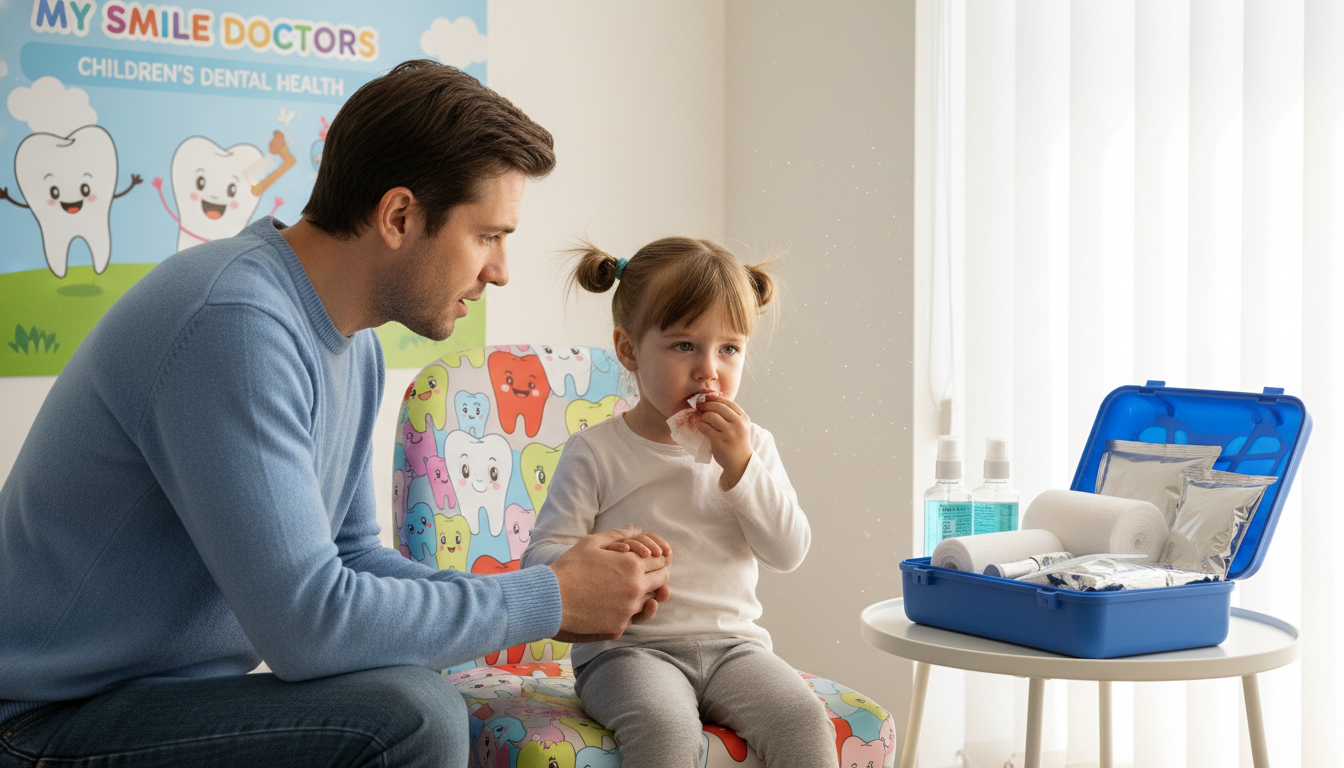
Read more first-aid tips or call us if you need immediate guidance.
Managing Pain and Swelling at Home
Caring for a sore mouth need not be stressful. A calm, simple plan can ease discomfort while you prepare to see us.
Using cold compresses
Apply a cold compress — an ice pack wrapped in a towel — to the affected cheek. Do this in short intervals (10 minutes on, 10 minutes off) to reduce swelling and numb pain.
For a child over six years old, the compress is safe when supervised. If jaw pain is intense, repeat the short cycles until you can reach the clinic.
Rinsing with warm salt water also helps. Mix half a teaspoon of salt in a glass of warm water and have your child gently swish to remove debris and soothe the gums and tooth area.
- Keep the child calm and discourage touching the affected area.
- If a knocked-out tooth is involved, follow specific storage steps rather than rubbing the root.
- Remember: these measures are temporary — professional treatment is needed to restore and protect teeth.
“Simple first steps — cold and a warm salt rinse — can make a big difference to pain and swelling while you get to us.”
Providing Emergency Dental Care for Children
When a sudden mouth issue arises, our team acts quickly to comfort your child and begin effective treatment.
We ease anxiety with calm explanations and gentle handling so every visit feels safe. Our dentist and staff use child‑friendly approaches across a range of urgent services.
We offer extended hours and after‑hours advice. You may call the after‑hours service on 1800 098 818 if you need immediate information outside clinic hours.
Whether the problem involves a baby tooth, a damaged root or a more complex procedure, we tailor treatment to your child’s age and needs. Restoring smiles and protecting long‑term oral health is our priority.
- Specialised care for young patients to reduce fear.
- Extended hours and after‑hours support to help people when they need us most.
- Skilled dentist able to manage simple to complex tooth issues.
| Service | What we do | When to call |
|---|---|---|
| Knocked or loose tooth | Assess, replant if suitable, preserve root | Call now or visit during clinic hours |
| Severe pain or swelling | Rapid assessment, pain relief and treatment plan | Contact us or use after‑hours number |
| Baby tooth concerns | Age‑appropriate management to protect adult tooth | Book same‑day if possible |
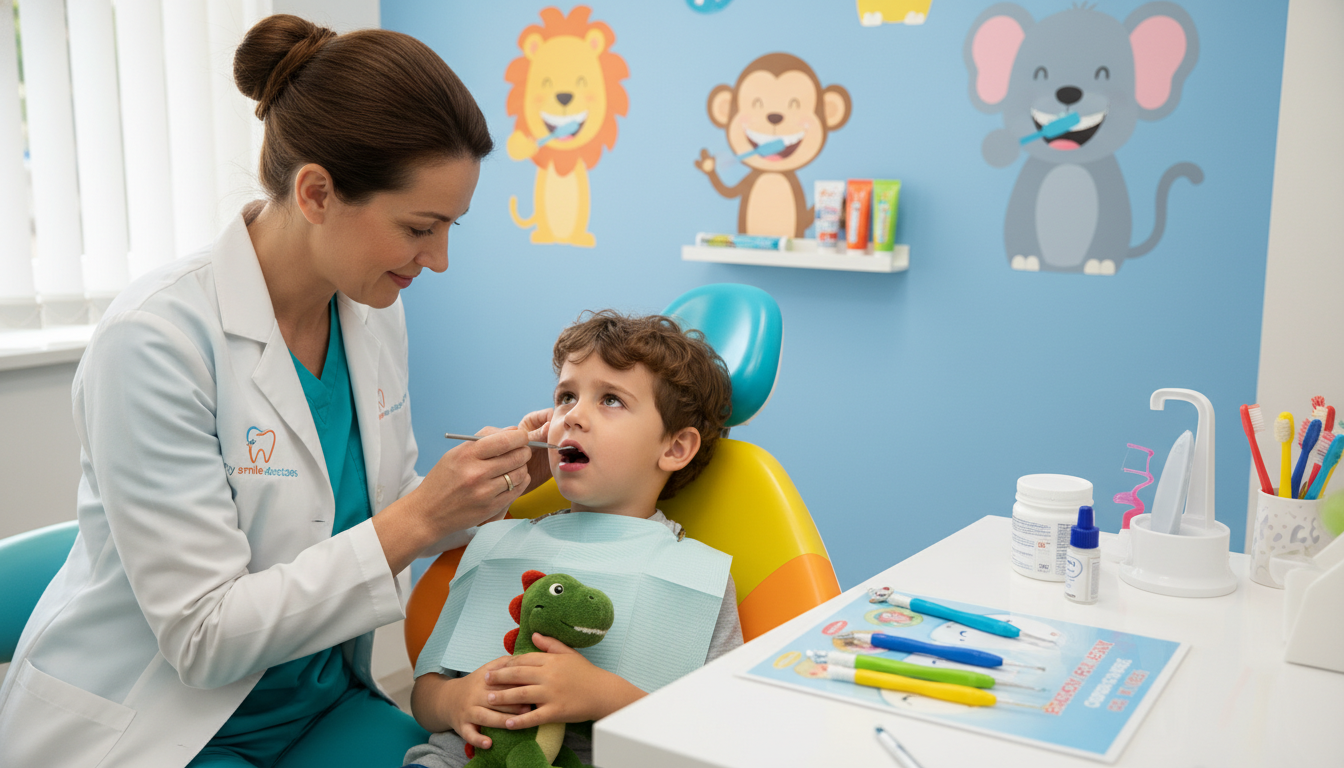
Learn more about our child dental services and bookings via kids dentistry at MySmile Doctors.
Preparing for Your Visit to Our Parramatta Clinic
Before you arrive, a few simple steps help us welcome your child quickly and calmly.
Arrival procedures
Please come during our business hours of 8:30am — 4:30pm, Monday to Friday. At reception we will ask for your child’s name, address and date of birth so we can update our records promptly.
Providing consent
We will talk through any use of child dental benefits and ask for your formal consent if you plan to use a Health Care or Pensioner Concession Card. Bringing your Medicare or concession card speeds processing and reduces delays.
Basic information
Our staff complete necessary paperwork with care and patience, and we aim to make the appointment smooth. If you want tips on preparing your child, see our short guide: prepare your child for their first.
“Arrive organised and we will focus on comfort, quick assessment and clear next steps.”
Essential Items to Bring to Your Appointment
To help us provide fast, effective treatment, please come prepared with a few simple items.
Bring your Medicare card and any relevant Health Care or Pensioner Concession Card so child dental benefits apply smoothly at the clinic.
If you are bringing a knocked-out tooth, store it in a small container of milk or water to keep it moist. This gives the dentist the best chance to preserve the tooth during treatment.
Comfort items make a big difference. Bring a favourite toy, device or communication tool to help your child feel calm while we work to provide gentle care.
Also bring any recent dental records and a list of questions about the proposed treatment or ongoing services. That information helps our team give efficient, personalised support.
“Arrive with key papers and comforts — it lets us focus on your child’s health and comfort right away.”
Conclusion
Knowing quick steps helps protect a child’s teeth and long‑term oral health. Act fast with a knocked‑out tooth or severe swelling, bring your Medicare or Health Care / Pensioner Concession card, and arrive ready for a prompt appointment at 37 Grose St, Parramatta.
Our dentist and team provide calm, expert care and tailored services to people of all ages. We aim to reduce stress and restore comfort in minimal time.
If you need advice or to book an urgent visit, please call us on 02 8036 2411. We’re here to help and to protect smiles every year.