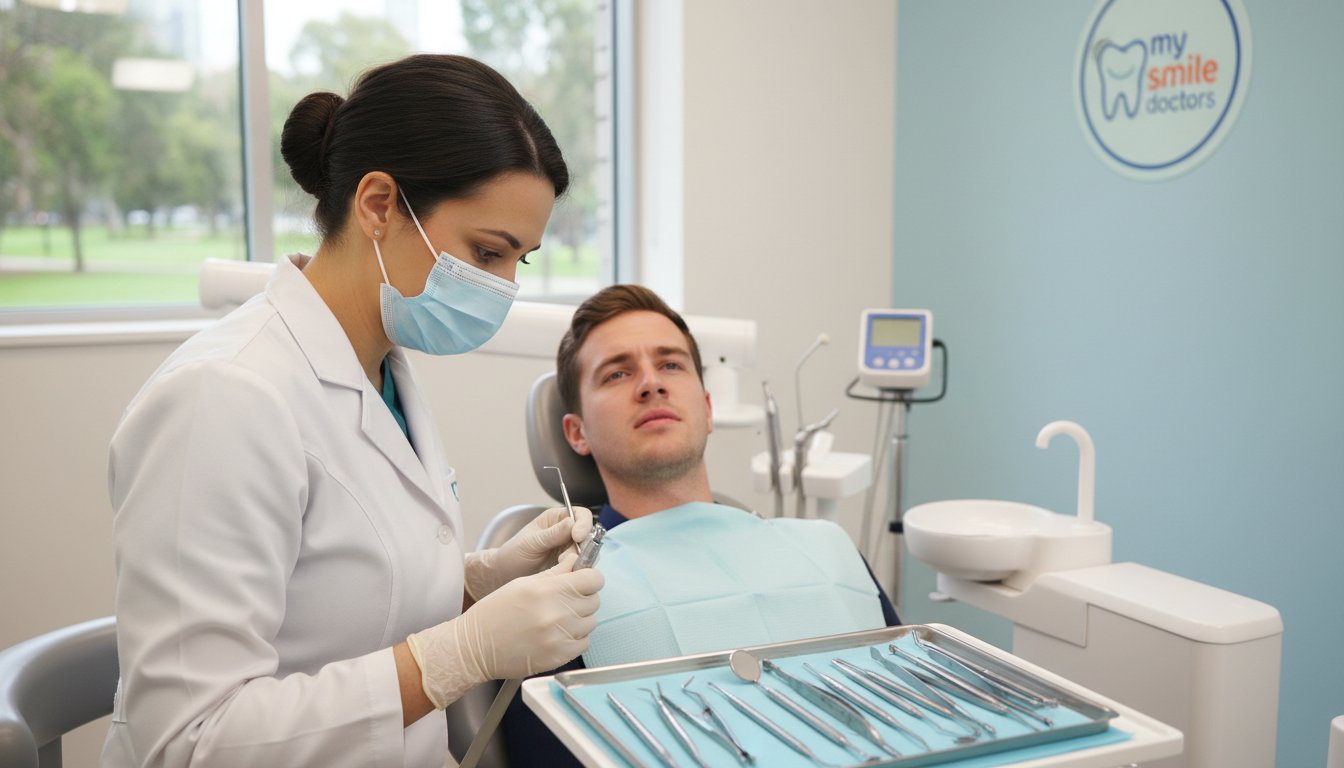
We’re here for you in Parramatta. If a sudden tooth injury affects your smile or comfort, call 02 8036 2411 for prompt support at our clinic on 37 Grose St, Parramatta, NSW, Sydney, Australia.
Our team understands how frightening a traumatic dental event can be. We act quickly to protect your teeth and reduce the risk of long‑term damage — all with calm, compassionate attention.
From cracked enamel to displaced teeth, our dentist and staff focus on stabilising the mouth and easing pain. We treat patients of all ages, explain each step clearly, and aim to restore function and confidence.
Call us now on 02 8036 2411 if you need immediate help — our clinic at 37 Grose St is ready to provide professional, patient‑centred support when it matters most.
Key Takeaways
- Call 02 8036 2411 for immediate assistance at our Parramatta clinic.
- We provide fast, professional treatment to protect teeth and reduce long‑term risk.
- Our dentist and team support patients with clear, compassionate guidance.
- Visit us at 37 Grose St, Parramatta, NSW, Sydney, Australia for urgent attention.
- Prompt action often prevents further damage and helps restore your smile.
Understanding Dental Trauma
When a tooth is knocked, cracked or becomes loose, understanding the injury helps us plan the right treatment.
Dental trauma describes any damage to teeth or nearby tissues from an external force — falls, collisions or similar incidents.
Dr Stephen Mace stresses that knowing the type of injury is the first step toward preventing long‑term dental problems. Prompt assessment reduces the chance of infection or nerve damage.
We treat a wide range of injuries, from small chips to major fractures. Our team provides tailored treatment to manage pain and restore function.
“Rapid, clear assessment guides the best approach for each tooth and protects future oral health.”
Ignoring a damaged tooth can raise the risk of infection and other complications. For confident advice, contact our dentist so we can explain options and begin appropriate care.
Immediate Actions for Dental Injuries
Acting quickly after a mouth injury greatly improves the chance of saving a lost tooth. Seek help within 30–60 minutes when possible — prompt attention matters for a successful outcome in a dental emergency.
Handling a Knocked-Out Tooth
Pick up the tooth by the crown only. Rinse it gently with milk or saline and avoid touching the root to protect fragile cells.
Store the tooth in milk or saliva — never plain water — while you travel to our clinic. Contact our dentist right away; time is critical for reimplantation and to reduce the risk of infection.
Managing Pain and Swelling
Apply a cold compress to the affected area for 15 minutes to ease pain and control swelling.
If there is bleeding, use a clean cloth and gentle pressure. Over-the-counter pain relief can help until you reach us for further treatment.
Quick, calm steps for dental trauma can preserve a tooth and lower the chance of long-term problems. We’re here to support you through each step with clear, compassionate guidance.
Common Types of Traumatic Dental Injuries
Different types of mouth injuries demand specific responses to save teeth and reduce complications.
Fractured tooth — A fractured tooth can stem from trauma or decay. Often we use bonding or a crown as the best treatment to restore structure and reduce sensitivity.
Displacement — When a tooth is pushed out of its original position, prompt repositioning is vital to prevent tooth loss and keep the tooth stable in its socket.
Dislodged or avulsed tooth — If a tooth is completely knocked out, quick action improves reimplantation success. Store the tooth correctly and contact us immediately.
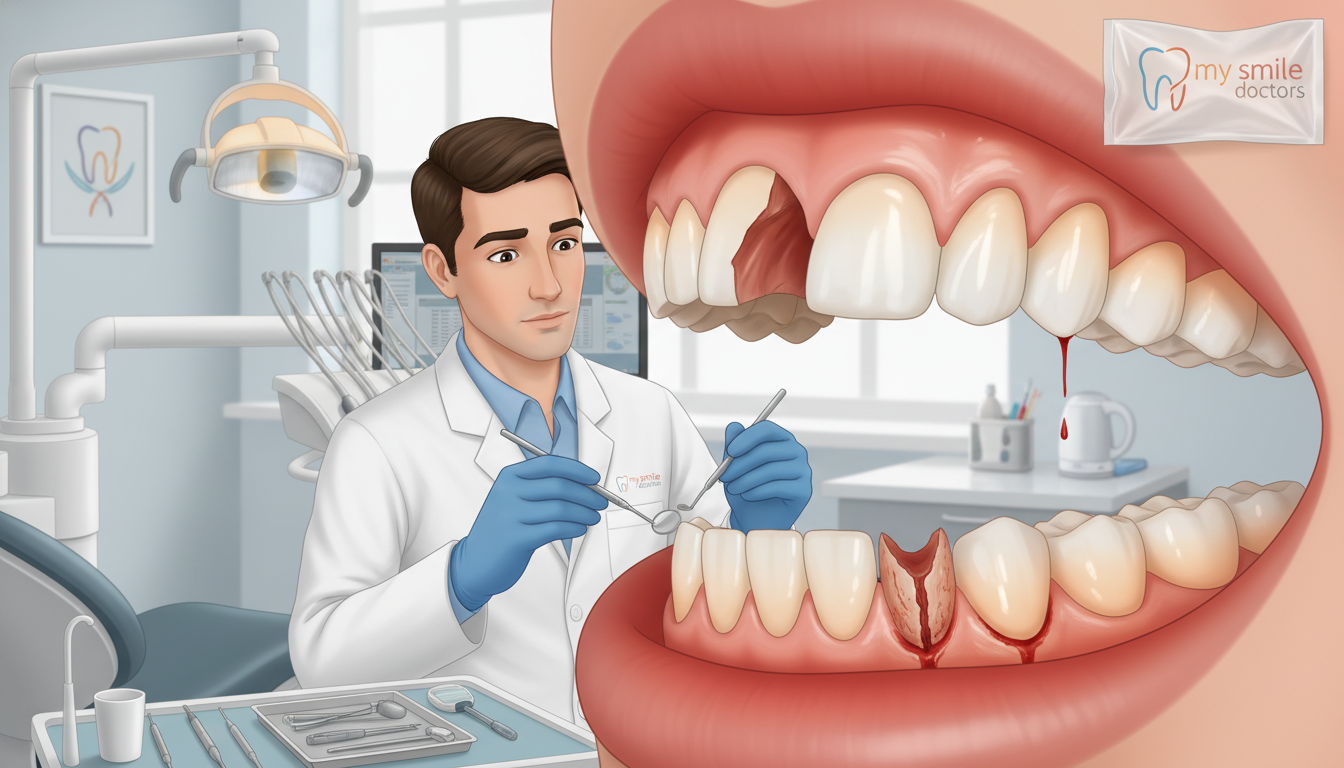
We frequently treat children who present with pain, swelling and bleeding in the affected mouth area. Sensitivity often signals a cracked or fractured tooth, and our diagnostic checks show whether a tooth extraction or root treatment is needed.
Infection risk — Severe fractures or dislodgement raise the chance of infection and long‑term problems if left untreated. By identifying the specific type of traumatic dental injury, we offer targeted treatment options to save natural teeth.
- Fracture from decay or impact — bonding or crown.
- Tooth out of original position — immediate repositioning.
- High infection risk — prompt professional assessment reduces future issues.
For more clinical guidance on management, see this review on treatment outcomes at best practice in tooth injuries and local support details at our Parramatta clinic.
Primary Causes of Dental Trauma
Contact sport is a leading reason why people damage their teeth. We see many cases from tackles, falls and direct blows to the mouth.
Sports and physical activity often cause tooth loss or severe fractures. We recommend custom-fitted mouthguards to reduce this risk and protect your smile.
Biting hard objects — ice, pens or shells — also causes sudden damage. Such habits can lead to pain, swelling and bleeding in the area and may need prompt treatment.
Neglecting good oral hygiene weakens enamel. Decay makes a tooth more likely to crack during a minor knock.
How we evaluate risks
After any injury, we check for signs of infection or internal damage. Early assessment helps prevent further problems and may save the tooth.
| Cause | Common outcome | Simple prevention |
|---|---|---|
| Contact sport | Fracture or tooth loss | Custom mouthguard |
| Chewing hard objects | Cracked tooth, pain | Stop the habit |
| Poor hygiene / decay | Weakened structure, higher risk | Consistent oral hygiene practices |
We aim to support athletes and families with practical advice and prompt assessment to protect long-term oral health.
Professional Emergency Dental Trauma Care
When oral injury strikes, prompt professional assessment makes the difference between saving a tooth and losing it.
Diagnostic Imaging
We use modern imaging to see the full extent of an injury. X-rays and 3D scans reveal root position, fractures and hidden damage.
Fast, clear imaging helps our dentist plan treatment and reduce the risk of infection.
Root Canal Therapy
If trauma reaches the root and nerve, a root canal can save a tooth that would otherwise need extraction.
Our team performs precise root and canal work to halt infection and relieve pain. This approach keeps teeth in place when possible.
Tooth Reimplantation
If a tooth is knocked out, we aim to return it to its original position and stabilise it for healing.
Reimplantation is time‑sensitive — our clinicians, led by Stephen Mace, follow protocols to improve success rates and manage swelling and bleeding.
“Timely, expert treatment gives the best chance to preserve natural teeth and prevent further harm.”
| Service | When used | Benefit |
|---|---|---|
| Diagnostic imaging | Initial assessment | Accurate diagnosis, targeted treatment plan |
| Root canal therapy | Nerve involvement or infection | Saves tooth, reduces pain and infection risk |
| Tooth reimplantation | Tooth avulsed and timely presentation | Restores original position, preserves function |
| Consultation fee | Urgent appointment | $150–$350 (transparent pricing) |
We tailor treatment options to each patient — from repairing a fractured tooth to complex root canal therapy — and provide calm, practical advice about risks and next steps.
Preventive Measures for Long-Term Oral Health
A few proactive steps help keep your smile strong and reduce the need for complex treatment.
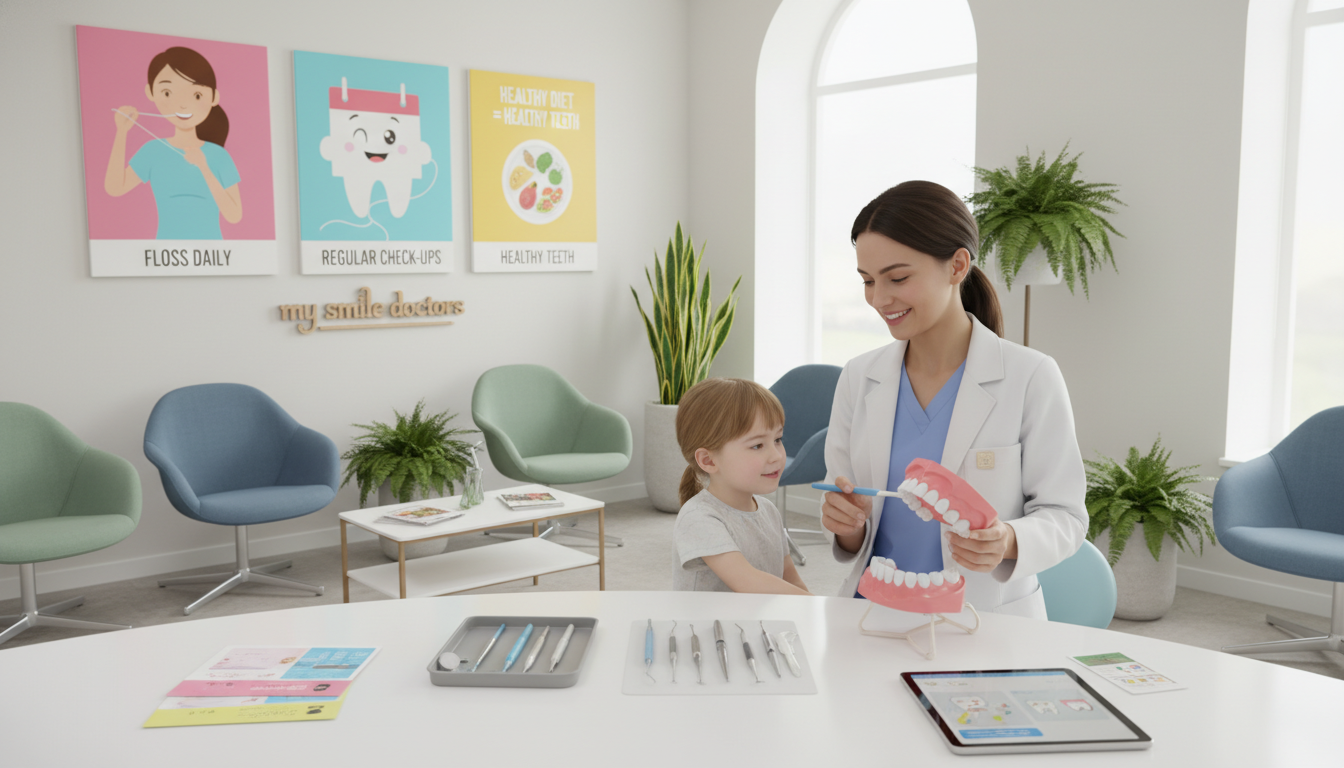
Regular check-ups let our dentist spot decay or misalignment early. This prevents minor problems turning into serious injuries or the need for extraction.
Wearing a custom-fitted mouthguard is vital for sports and active hobbies. It reduces the risk of knocked or fractured teeth and protects soft tissue in the mouth.
After any injury, we monitor healing over the 1–2 weeks initial period and plan splint removal in 2–4 weeks where needed. This follow-up protects teeth while they stabilise.
Good oral hygiene practices — brushing twice daily, flossing and avoiding hard habits — lower infection risk and strengthen tooth structure against decay.
| Preventive step | When to use | Benefit |
|---|---|---|
| Regular dental check-up | Every 6 months or as advised | Early detection of decay and misalignment |
| Custom mouthguard | Contact sport or high-risk activity | Reduces impact to teeth and soft tissue |
| Hygiene routine | Daily | Lowers infection and structural weakness risk |
| Post-injury monitoring | 1–4 weeks after treatment | Ensures proper healing and splint timing |
“Prevention and timely follow-up give the best chance to keep natural teeth for life.”
Managing Dental Trauma in Children
Kids’ teeth are still developing, so even minor impacts need careful attention. We act quickly and gently to protect growth and reduce longer‑term risk.
Importance of Early Intervention
Fast assessment helps preserve a tooth and stops infection from starting. Swelling and pain are calmer when we begin treatment early.
If a child has a tooth knocked out, we give immediate support to assess if reimplantation is possible. We explain each step to parents and keep the child comfortable.
- We teach parents simple steps for safe storage and transport of a lost tooth.
- Protective gear and good hygiene lower the chance of future injuries and infection.
- When extraction or repair is needed, we use child‑friendly methods to reduce anxiety.
| Immediate step | Timing | Benefit |
|---|---|---|
| Assess and stabilise | Within 30–60 minutes | Improves chance to save the tooth |
| Manage swelling and pain | First few hours | Comfort and reduced infection risk |
| Follow-up visits | 1–4 weeks | Monitors healing and development |
We support families with clear advice and follow-up so children keep their natural teeth when possible and regain confidence after an injury.
Visit Our Parramatta Clinic for Urgent Support
If a sudden tooth injury has left you worried, our Parramatta clinic is ready to help immediately.
Visit our clinic at 37 Grose St, Parramatta, NSW, Sydney, Australia for urgent support and expert dental care when you need it most.
Call us at 02 8036 2411 to speak with our team about your dental emergency and receive immediate advice on how to manage your injury.
We provide a welcoming environment for all patients. Our dentist offers effective treatment options for pain, swelling, and bleeding in the affected area.
Whether you need a simple repair or a tooth extraction, we explain options clearly and act to reduce infection risk and further damage.
- Friendly staff who guide you from first call to treatment.
- Prompt assessment to reduce the time a tooth or mouth is at risk.
- Follow-up and advice on good oral hygiene to lower future decay or problems.
“We aim to give calm, practical support so patients feel confident about their treatment choices.”
Conclusion
Timely treatment and clear follow-up planning help most people recover well after a tooth injury. We aim to reduce pain and lower the risk of infection with prompt, practical options.
Maintain good oral hygiene and follow our advice to reduce the chance of decay and future injuries. For children, early assessment often preserves developing teeth and eases worry for parents.
Our team offers a range of treatment choices — from a root canal or extraction to conservative repairs — and supports you through each step. Learn more about how we manage urgent cases at how emergency dentistry treats dental trauma.
We are committed to your comfort and to protecting your teeth for years to come.