
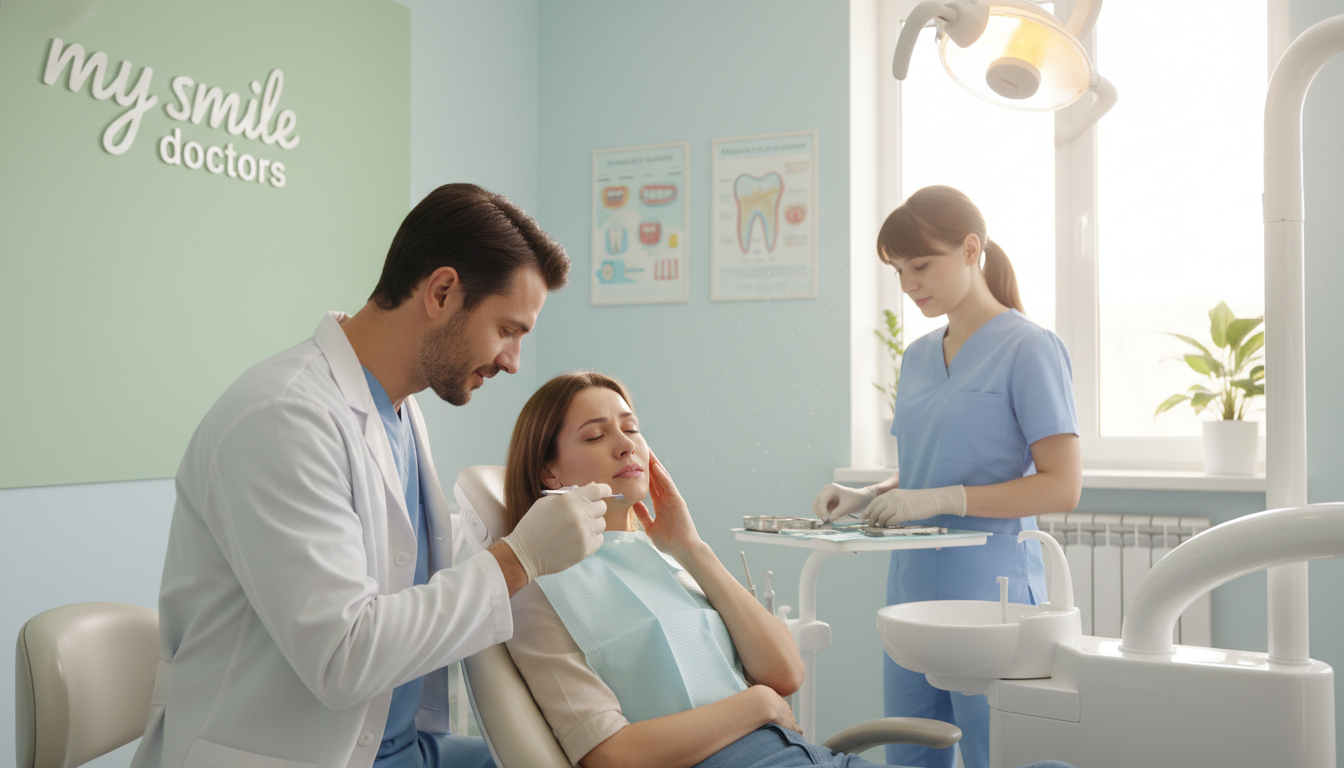
We know sudden dental pain can be frightening. At our clinic on 37 Grose St, Parramatta, NSW, we focus on calm, caring support to get you back to comfort quickly.
If you have severe tooth pain or a dental emergency, call us on 02 8036 2411. Our team listens first, then acts — providing clear options and swift relief where possible.
We balance advanced care with gentle attention, so every visit feels safe and reassuring. Our goal is to restore oral health and keep you comfortable, whether that means pain control, advice or same-day review with an experienced dentist.
Key Takeaways
- Call 02 8036 2411 for urgent help at 37 Grose St, Parramatta, NSW.
- We provide fast, compassionate care for sudden dental pain and tooth issues.
- Our team aims for quick relief and clear next steps tailored to you.
- Visits are patient-centred — we explain options and prioritise comfort.
- Choose a practice that supports long-term oral health with trusted dental care.
Understanding the Signs of a Dental Emergency
Not all dental pain signals the same problem — spotting the signs early helps protect your smile.
Persistent tooth pain or noticeable swelling can point to an underlying infection or an abscess. These often start as a mild toothache and grow worse if ignored.
Common causes we see include advanced tooth decay and untreated gum disease. Both conditions weaken the structure of a tooth and can lead to serious complications.
We advise you to contact a dentist if your pain worsens or does not ease after a few days. Early review helps protect your overall health and preserves your teeth.
“Recognising early warning signs lets us act quickly and avoid more complex issues.”
- Watch for swelling, fever, or spreading soreness.
- Note any visible decay or persistent sensitivity.
- Seek prompt advice to reduce risk of a serious dental emergency.
Immediate Steps for Emergency Toothache Treatment
Start with calm, practical measures to limit discomfort and protect the affected tooth. These first steps help reduce swelling and give clear next steps when you contact our clinic.
Rinsing and Flossing
Rinse your mouth with warm water to clean the area and loosen debris around the affected tooth. Gently floss to remove trapped food — this may help ease pressure and reduce tooth pain.
Managing Inflammation
Apply a cold compress to the cheek for 15 minutes to help reduce facial swelling and provide short-term relief. Keep your head elevated when resting to help lower blood flow to the mouth and counter throbbing from a deep root issue.
Over-the-counter pain relief can be useful, but be cautious with clove oil — apply a tiny amount to a cotton swab and avoid direct contact with the gum to prevent damage. These steps can help reduce discomfort, but they are not a substitute for professional care. Contact our dentist so we can assess the mouth and arrange urgent support.
“Simple, calm actions now can help preserve the tooth and limit swelling until you reach a clinician.”
When to Seek Urgent Professional Dental Care
We recommend prompt clinical review when signs point to a serious problem. Early assessment reduces the risk of lasting damage and helps us plan the right care for your needs.
Recognising Serious Symptoms
Act quickly if your tooth pain is accompanied by a fever — this can signal a spreading infection or an abscess that needs professional attention.
- Persistent bleeding from the gums or a loose tooth requires an emergency dentist for safe stabilisation.
- Sudden facial swelling or trouble breathing are red flags; seek emergency dental care immediately to avoid serious complications.
- Sharp pain after a fracture, or deep pain that suggests the root or pulp is involved, needs fast diagnosis to preserve the tooth.
- Our team will check for advanced decay, infection or abscess and explain options to stop the pain and protect your oral health.
“We prioritise your safety and provide the care needed to stop infection, reduce swelling and restore comfort.”
For practical guidance on where to go if you cannot reach us, see alternative urgent care options like this urgent care guide or contact a local emergency dentist in Parramatta.
Common Causes of Severe Tooth Pain
Many cases of sharp dental pain come from a few common problems. Knowing these helps us act quickly and plan the right care.
Advanced Decay
Advanced decay lets bacteria reach the inner layers of a tooth. This can irritate the nerves and cause intense pain.
Abscessed Teeth
An abscess forms when an infection gathers at the tooth root. Swelling and throbbing may follow and the risk of jaw damage rises.
Fractured Structures
Cracks or breaks—often from trauma or grinding—can expose the pulp. This creates sudden, sharp pain and raises the chance of further complications.
| Cause | Typical Signs | Why it hurts | What we do |
|---|---|---|---|
| Advanced decay | Sensitivity, persistent ache | Bacteria reaches nerve | Diagnose, plan for long-term relief |
| Abscess | Swelling, fever, severe pain | Infection at root | Drainage and focused care |
| Fracture | Sharp pain on biting | Exposed pulp | Stabilise and restore |
Do not ignore persistent discomfort. If you need immediate advice or suspect a dental emergency, our dentist team will assess your options. For reliable online guidance, see advice on tooth pain.
“Early diagnosis lets us protect your tooth and reduce the chance of losing it.”
What to Expect During Your Emergency Visit
On arrival, we assess the mouth and affected tooth to map out the best path to relief.
Our dentist will perform a focused exam and may take digital X‑rays to check the root and surrounding bone. This helps us pinpoint the source of your pain.
We discuss all options clearly so you understand recommended steps. Our goal is lasting comfort for your tooth and overall oral health.
To keep you comfortable, we use local anaesthesia and gentle methods during any procedure. Depending on diagnosis, your plan may include a root canal or a filling to restore the smile.
- Thorough exam with X‑rays where needed.
- Clear discussion of options and expected outcomes.
- Local anaesthesia to manage pain during care.
- Post‑visit instructions to help healing and prevent further issues.
| Step | What we check | Possible actions |
|---|---|---|
| Initial exam | Visual check, X‑rays | Diagnosis and plan |
| Pain control | Local anaesthesia, comfort measures | Immediate relief and stabilisation |
| Definitive care | Root and tooth structure | Root canal or filling to restore function |
“We aim to combine swift clinical attention with gentle, patient-centred care to protect your tooth and ease dental pain.”
Effective Home Remedies for Temporary Relief
While you wait for professional care, a few gentle home actions can limit pain and protect the tooth. These measures are short‑term and meant to help reduce symptoms until a dentist assesses the mouth.
Using Clove Oil Safely
Clove oil can numb the affected area and give temporary relief. Apply a tiny amount on a cotton bud and press gently onto the tooth or nearby gum—avoid excess to prevent irritation.
Do not place oil directly on broken skin or a large sore area. If swelling or signs of infection appear, contact a dentist promptly—these remedies are not a substitute for clinical care.
- Gargle with warm salt water for 30 seconds to act as a mild antiseptic and help reduce swelling.
- Use a small dose of clove oil sparingly to calm pain; never swallow the oil.
- Over‑the‑counter pain relief can be useful, but it should not replace professional attention during a dental emergency.
- Keep up gentle brushing and good oral hygiene to limit further decay or infection.
“These steps may include simple measures to stabilise comfort — they bridge the gap until we can provide definitive care.”
Preventing Future Dental Complications
A few consistent steps at home go a long way in protecting your teeth and reducing the chance of sudden pain. We focus on simple habits that fit busy lives and keep the mouth healthy.
Daily oral hygiene matters. Brush twice and floss daily to stop decay reaching the root and causing severe complications.
Drink plenty of water during the day. Water helps wash away food particles and supports a balanced mouth environment.
- Visit us for regular checkups so small issues do not become a dental emergency or cause lasting damage.
- If you play contact sports, wear a custom-fitted mouthguard to protect your smile from physical harm.
- Prompt attention to gum soreness or early infection reduces the risk of severe complications and future pain.
| Habit | Why it helps | Result |
|---|---|---|
| Daily brushing & flossing | Removes plaque and food debris | Fewer cavities, less tooth pain |
| Regular dental visits | Early detection of decay or root issues | Avoids complex care later |
| Hydration (water) | Neutralises acids and clears debris | Improved mouth balance and relief |
“Small, steady actions protect your smile and reduce the chance of serious complications.”
Conclusion
Act early when you spot worrying signs — quick assessment helps us protect your smile. If you notice persistent symptoms, swelling or fever, seek immediate attention so we can advise the right next steps.
Home measures such as warm salt water rinses, or small amounts of clove oil, may ease discomfort short‑term. These steps are helpful at the counter but cannot cure a serious dental emergency.
Our clinic provides prompt dental care for common causes like tooth decay and infections. We offer a range of treatments and can stabilise pain quickly while planning lasting repair.
Please call our team on 02 8036 2411 to arrange review with an experienced emergency dentist. We are here to give calm, effective help when you need it most.