
Dentist Parramatta NSW

Tongue Tie Sydney Parramatta Expert Care for Babies

Tongue Tie Sydney Parramatta Expert Care for Babies

We’re here to help your baby feed, speak and smile with confidence. At our clinic on 37 Grose St, Parramatta, NSW 2150, we offer gentle, modern care designed for busy families.

If you suspect your infant has a tongue tie, call us on 02 8036 2411 to book an appointment. Our team explains each step clearly, so you know what to expect and feel calm about the process.

We use advanced laser surgery and brief procedures that aim to reduce discomfort and cut recovery time. Our focus is on compassionate treatment—so babies and parents feel supported every minute.

Choose our clinic for experienced clinicians, simple aftercare and a child-friendly space close to home. Learn more about how we help with feeding and speech by visiting our service page.

Key Takeaways

  • Convenient location: 37 Grose St, Parramatta, NSW 2150, near local families.
  • Quick, gentle care: laser procedure to resolve issues with minimal disruption.
  • Expert team: friendly staff who explain treatment and follow-up clearly.
  • Easy booking: call 02 8036 2411 to arrange an appointment.
  • Baby-centred approach: comfort, safety and clear post-procedure guidance for parents.

Understanding Tongue Tie and Its Impact on Infants

A close-up image of a young infant, gently held by a caring pediatrician in a professional, modest attire, in a soft-lit consultation room. The focus is on the infant’s mouth area, clearly showing the subtle characteristics of a tongue tie, while the pediatrician demonstrates a compassionate expression, emphasizing the nurturing atmosphere. In the background, blurred medical tools and a welcoming infographic about tongue tie can be seen, promoting a sense of expert care and comfort in a healthcare setting. The lighting is warm and inviting, creating a serene mood that underscores the importance of understanding tongue tie. Capture the essence of specialized care in Sydney and Parramatta with the brand name "my smile doctors" integrated within the setting.

Many caregivers notice feeding struggles in early days and seek clear answers about what might be causing them. We explain how a short frenum can affect feeding and development so parents feel confident deciding next steps.

Signs of breastfeeding difficulties

Research shows this condition affects about 5% of people and often causes breastfeeding problems for both mum and baby.

  • Poor latch and frequent nipple pain during feeds.
  • Clicking sounds or loss of suction while the infant feeds.
  • Poor milk transfer leading to slow weight gain.

Long-term developmental concerns

If a short frenum is not addressed, it can affect speech and oral health as the child grows. We work with parents and a lactation consultant to spot problems early and plan care.

Issue Early symptom Why we monitor
Feeding Poor latch, long feeds Ensure adequate milk and weight gain
Nipple pain Cracked or sore breast Protect mother’s comfort and lactation
Speech & oral health Restricted lip or tongue movement Support development and prevent problems

Our team watches development closely and guides families through simple checks. Early assessment helps most babies feed easier and supports healthy growth.

Professional TONGUE TIE SYDNEY PARRAMATTA Treatment Options

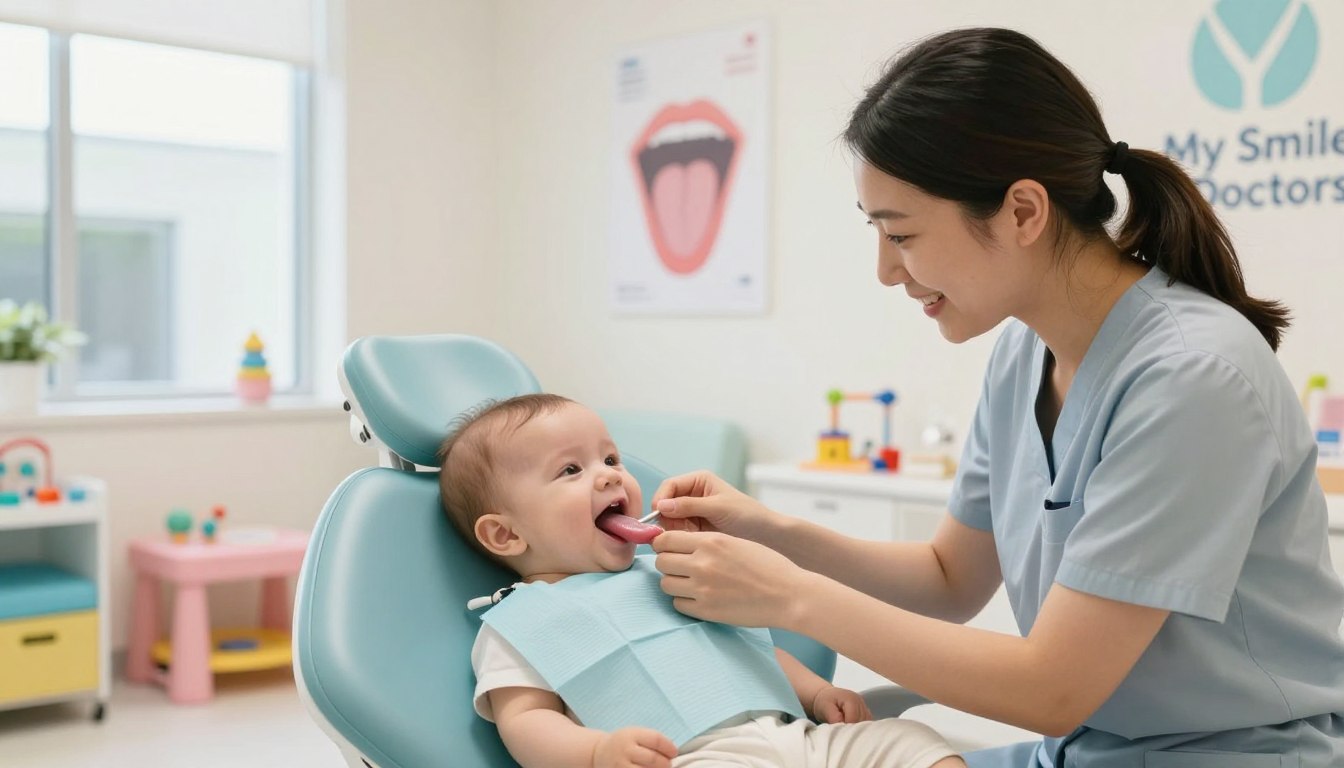
A warm and compassionate clinical setting showcasing a tongue tie treatment consultation. In the foreground, a healthcare professional in smart casual attire, focused and attentive, gently examining a baby's mouth, who appears calm and relaxed. The middle ground features a pediatrician's office with soft, natural lighting illuminating medical tools and anatomical charts on the walls, creating an inviting atmosphere. In the background, a soothing color palette of light blues and greens adds a sense of tranquility, while a logo prominently displays "my smile doctors" to emphasize expertise in tongue tie treatment. The composition captures a professional yet caring mood, emphasizing comfort and trust for concerned parents in Sydney and Parramatta.

We provide modern laser and surgical options designed to restore free tongue movement and support feeding and speech.

Our clinic offers a full range of advanced laser treatments to release tight tissue and improve motion in the mouth.

  • Laser release: precise lasers reduce pain, cut bleeding and usually remove the need for stitches.
  • Lingual frenectomy: for children over 18 months we may use general anaesthetic so the patient is comfortable during surgery.
  • Complex cases: we assess and treat combined lip and tongue concerns that affect breastfeeding and later speech.

Early treatment can prevent future speech problems and help babies and children gain full function. We tailor each procedure to the child’s age and symptoms, so families feel supported and informed.

Managing Dental Anxiety and Creating a Comfortable Environment

Children often enter the clinic nervous, so we focus on calm routines that build trust from the first hello. Our team creates a welcoming dental home where parents feel included and a child feels safe.

Techniques for nervous patients

Research from 1995 highlighted that dental fear in childhood is common. We respond with clear steps that reduce worry and make a procedure easier to accept.

Tell‑Show‑Do helps a child understand what will happen. We explain, demonstrate and then perform the small steps, so the patient is prepared.

  • Comforting staff and a child‑friendly space.
  • Options for intravenous anaesthetic when the dental setting causes significant difficulties.
  • Support for feeding and lip or tongue concerns, tailored by age and symptoms.

By addressing anxiety early, we improve oral health outcomes and make treatment smoother for parents and children. Learn more about our surgical options at tongue-tie surgery in Parramatta.

Conclusion and Booking Your Appointment

For concerns about breastfeeding, movement or oral development, our clinic offers fast, friendly support. Call us to book an appointment and we’ll arrange a clear assessment for your baby or child.

Our team combines advanced laser treatment with a gentle approach so the patient is comfortable throughout the procedure. We work with a lactation consultant and an experienced dentist to resolve feeding issues, manage pain and restore healthy mouth movement.

We understand how worrying feeding difficulties can be. Whether you need a simple release, surgical care under anaesthetic or hands‑on lactation help, we support families every step of the way. Book now to take a positive step for your child’s long‑term development and health.

FAQ

What is a tongue tie and how can it affect my baby’s feeding?

A tongue tie is a short or tight band of tissue under the tongue that limits movement. For babies, this can cause poor latch, nipple pain for the parent, inadequate milk transfer and slow weight gain. Early assessment by our lactation consultant and dentist helps determine whether a simple procedure or supportive feeding strategies are needed.

What signs should alert me to possible feeding difficulties?

Look for persistent nipple pain, clicking noises during feeds, fussiness at the breast, long or frequent feeds, reflux-like symptoms and slow weight gain. You may also notice the baby cannot stick out or lift their tongue well, or has trouble with bottle feeding. If you’re concerned, we recommend an appointment sooner rather than later.

What treatment options do you offer for restricted frenulum?

We provide gentle release procedures using modern techniques such as diode laser or scissors under local anaesthetic when appropriate. Our approach emphasises minimal discomfort, quick healing and immediate improvement in movement. We also coordinate with lactation consultants to support feeding before and after the procedure.

Is the procedure painful and what anaesthetic do you use?

We aim to keep your baby comfortable with topical or local anaesthetic suited to their age and needs. Discomfort is usually brief; many families describe only minor fussing during the procedure. Our team monitors the child closely and offers calming techniques to reduce distress.

How soon will we see improvement in feeding after treatment?

Many parents notice better latch and more efficient milk transfer immediately or within 24–48 hours. Full feeding patterns may take a few days as both baby and parent adapt. We provide follow-up care and exercises to encourage optimal movement and function.

Are there risks or complications I should know about?

Complications are uncommon when the procedure is performed by experienced clinicians. Possible issues include minor bleeding, infection or reattachment of the tissue. We discuss risks clearly at your appointment and give aftercare instructions to minimise problems and support healing.

Do older children or adults benefit from release procedures?

Yes. While early intervention often produces the best feeding outcomes for infants, older children and adults with speech, swallowing or oral hygiene issues may also benefit. We assess each patient’s needs and provide tailored treatment and therapy referrals when necessary.

How do you support anxious parents and children during visits?

We create a calm, child-friendly environment and use proven techniques to reduce anxiety—clear explanations, gentle handling, distraction methods and compassionate care from our team. Parents are involved at every step so they feel reassured and informed.

Will my baby need speech therapy after the procedure?

Not always, but some children benefit from targeted exercises or speech pathology if there are existing articulation or oral motor concerns. We work with local speech therapists and lactation consultants to ensure a coordinated care plan if therapy is recommended.

How do I book an assessment and what should I bring to the appointment?

Call our clinic or book online to schedule an assessment with our dentist and lactation consultant. Bring feeding records, weight notes and any questions you or your family have. We’ll perform a thorough exam, discuss options and outline a personalised plan for treatment and follow-up.

Does private health insurance cover the procedure?

Coverage varies by fund and policy. Many private health insurers provide partial cover for oral surgery or dental procedures; however, out‑of‑pocket costs may apply. We can help you estimate fees and provide itemised accounts for claims.

What aftercare is required at home following a release?

Aftercare typically includes gentle wound care, short tongue or lip exercises to prevent reattachment, and continued breastfeeding or bottle techniques as advised. We provide clear written instructions and a follow-up review to monitor healing and progress.

Can a frenulum reattach and what happens then?

In some cases, partial reattachment can occur. If symptoms recur, we reassess and may recommend a minor revision. Performing recommended stretches and follow-up reduces the chance of significant reattachment.

How do you work with lactation consultants and other specialists?

We take a team approach—coordinating closely with International Board Certified Lactation Consultants, speech pathologists and paediatricians to deliver comprehensive care. This ensures feeding, weight and developmental concerns are all addressed together.

Leave your thought here