If it has been a while since your last appointment, it is completely normal to wonder what is included in a dental clean. Many patients expect a quick polish and rinse, then are surprised to learn that a proper professional clean is a more thorough preventive visit designed to protect both your teeth and your gums.
A dental clean is not just about making your teeth feel smoother. It is a clinical treatment that helps remove the plaque, tartar and surface staining that regular brushing and flossing cannot always manage at home. For many people, it is also the appointment where small issues are spotted early, before they turn into larger and more costly problems.
What is included in a dental clean at a routine visit?
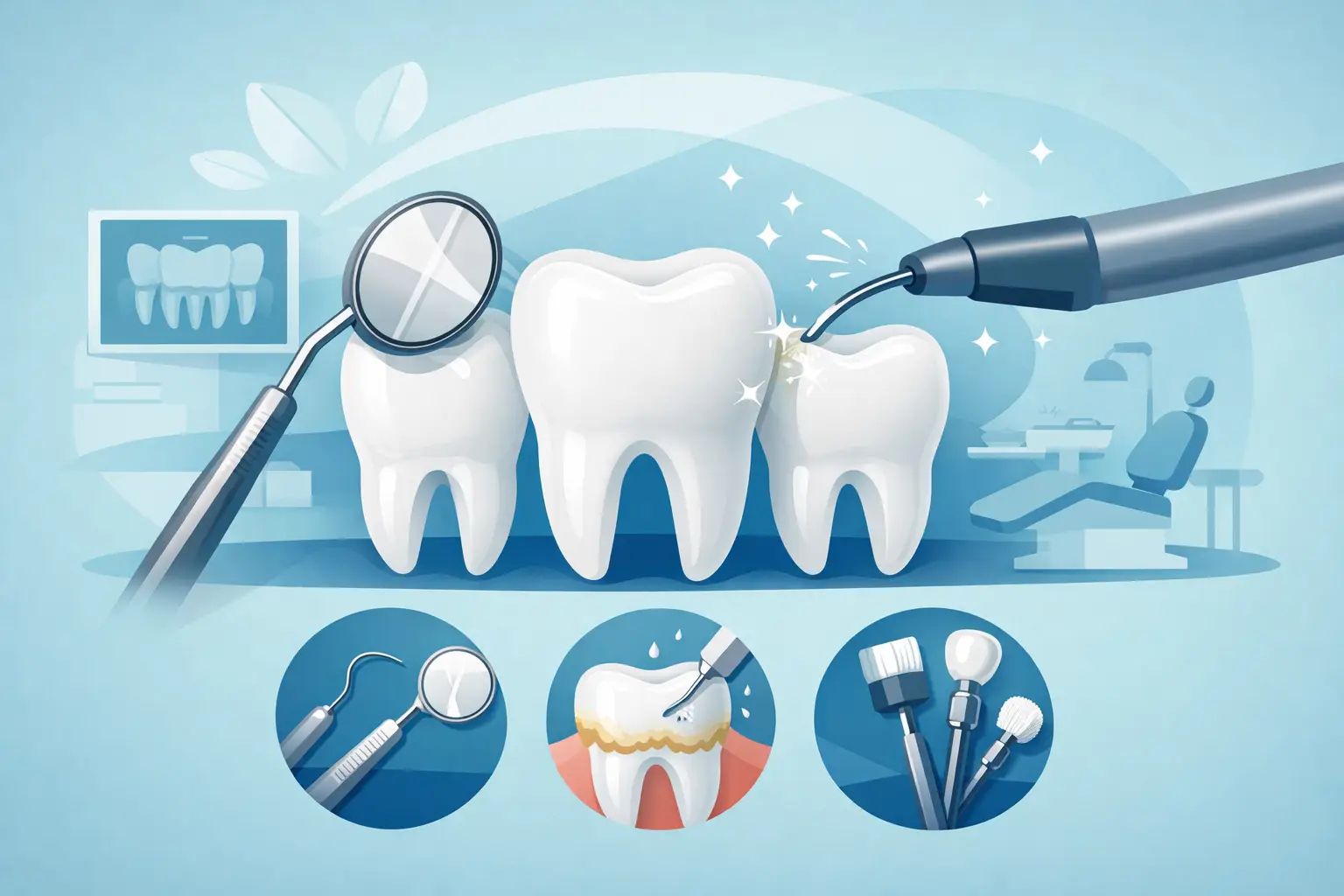
In most cases, a routine dental clean includes an assessment of your oral health, the removal of plaque and tartar, cleaning around the gumline, polishing the teeth, and tailored advice for home care. Depending on your needs, it may also include fluoride treatment, X-rays, or a discussion about signs of gum disease, tooth wear, decay, grinding, or other concerns.
The exact steps can vary from patient to patient. Someone who attends regularly and has healthy gums may have a relatively straightforward clean. Someone with more tartar build-up, bleeding gums, braces, implants, or a history of gum disease may need a longer appointment or a different type of periodontal treatment.
That is why a good dental clean is never really one-size-fits-all. It should be personalised to what your mouth needs on the day.
The first step is usually a check of your teeth and gums
Before the cleaning begins, your dentist or oral health practitioner will usually examine your mouth. This is an important part of the visit because cleaning without assessing the health of your teeth and gums can miss the bigger picture.
They may look for signs of tooth decay, cracked fillings, gum inflammation, recession, plaque build-up, tartar deposits, ulcers, bite issues, and areas that are difficult to keep clean. If you have sensitivity, bleeding when brushing, bad breath, or pain when chewing, this is the time to mention it.
For some patients, dental X-rays may also be recommended. These are not required at every visit, but they can help detect decay between the teeth, bone loss, hidden infections, and changes below the gumline that cannot be seen during a visual examination alone.
Plaque and tartar removal
The main clinical part of a dental clean is removing plaque and tartar. Plaque is the soft, sticky film of bacteria that forms on teeth throughout the day. If it is not cleaned away thoroughly, it can harden into tartar, sometimes called calculus. Once tartar forms, it cannot be removed with a toothbrush.
Your clinician will use professional instruments to gently remove these deposits from the tooth surfaces and around the gumline. This is often called scaling. You may hear scraping sounds during this stage, which can feel unusual but is completely normal.
The aim is to clean areas that home care commonly misses, especially behind the lower front teeth and around the upper molars, where tartar tends to collect. If tartar has built up below the gumline, the cleaning may need to be more detailed.
Some patients find this part very comfortable, while others with sensitive teeth or inflamed gums may notice mild discomfort. That often depends on how much build-up is present and whether the gums are already irritated. In many cases, the cleaner your gums become over time, the easier future cleans feel.
Cleaning around the gums matters as much as cleaning the teeth
One of the most valuable parts of a professional clean is what it does for your gums. Healthy gums should fit snugly around the teeth and should not bleed easily. If your gums are swollen, tender, or bleeding when brushed, that can be an early sign of gingivitis.
A routine clean helps reduce the bacteria and irritants that contribute to gum inflammation. If gum disease is more advanced, however, a standard clean may not be enough. In that situation, your dentist may recommend periodontal treatment instead, which is more focused on cleaning deeper pockets around the teeth and managing infection below the gumline.
This is an important distinction. Patients sometimes book in expecting a standard clean, but if active gum disease is present, the right treatment may be different. A responsible dental team will explain that clearly, because treating the cause properly matters more than simply making the teeth look cleaner.
Polishing to smooth away surface stains
After scaling, the teeth are often polished using a professional polishing paste and rotating brush or similar instrument. This helps remove light surface stains from things like coffee, tea, red wine, and smoking. It also leaves the teeth feeling smooth and fresh.
Polishing is sometimes the part patients remember most because it gives that just-cleaned finish. Still, it is not the main event. The real health benefits come from removing plaque and tartar and reducing the bacterial load around the teeth and gums.
It is also worth setting realistic expectations here. A dental clean can lift some external staining, but it will not change the natural shade of your teeth in the way whitening treatment can. If discolouration is deeper or more stubborn, your dentist may discuss cosmetic options separately.
Flossing, rinsing and checking the result
In many appointments, the clean will also include flossing between the teeth and rinsing to clear away loosened debris. Your clinician may then reassess certain areas to make sure build-up has been removed thoroughly.
This final check is useful because some tartar can hide in tight spots or near the gumline. It also gives your dental team a chance to identify areas where plaque is collecting repeatedly, which can tell them a lot about your brushing technique, flossing habits, crowding, restorations, or bite.
Personalised home care advice
A well-run dental clean should not end when you leave the chair. You should come away with practical advice that fits your mouth, not generic instructions you have heard a dozen times before.
That may mean showing you a better way to brush around the back molars, recommending interdental brushes for wider spaces, suggesting a softer toothbrush for recession, or explaining how to care for crowns, bridges, implants, or orthodontic appliances. If your child is attending, the advice may be tailored to brushing routines, diet, or how adult teeth are developing.
This education matters because professional cleans are periodic, while home care happens every day. The goal is not simply to clean your teeth for you. It is to help you maintain a healthier mouth between visits.
What a dental clean does not always include
There can be confusion around what is and is not part of a standard clean. A routine clean is preventive care, but it does not automatically include every dental treatment that might be needed.
For example, fillings, treatment for deep gum disease, wisdom tooth care, emergency pain relief, whitening, or repairs to broken teeth are separate services. Even fluoride treatment may be included in some cases and recommended as an add-on in others, depending on your age, risk of decay, and the clinic’s approach.
This is one reason dental fees can vary between patients. The time required, the condition of your gums, whether X-rays are needed, and whether the appointment includes a comprehensive examination all influence what is appropriate.
How long does a dental clean take?
A standard appointment often takes around 30 to 60 minutes, but it depends on your oral health and how much needs to be done. If you have not had a clean for several years, have heavy tartar build-up, or need a full examination with X-rays, your visit may take longer.
For busy families and professionals, it can help to think of a dental clean as preventive maintenance. A little time spent now can reduce the chance of needing more involved treatment later. That is especially true for gum disease, which often progresses quietly until the symptoms become harder to ignore.
How often should you have a dental clean?
For many people, every six months is a sensible guide, but there is no universal schedule that suits everyone. Some patients with excellent home care and low risk may need less frequent cleans. Others with gum disease, dry mouth, braces, smoking habits, or a history of rapid tartar build-up may benefit from more regular visits.
The right interval depends on your risk factors, not just the calendar. A personalised recommendation is usually more useful than a fixed rule.
Why regular cleans are about more than appearance
People often book a clean because their teeth feel furry, stained or overdue. That is understandable. But the real value of regular cleaning is what it helps prevent – gum disease, persistent plaque build-up, bad breath, hidden decay, and the gradual progression of small issues into larger ones.
At a clinic such as My Smile Doctors, a dental clean is part of a broader focus on comfortable, modern preventive care. That means helping patients feel informed, looked after, and confident about what is happening in their mouth, rather than rushed through a generic appointment.
If you are unsure whether you need a routine clean or something more targeted, that is worth asking before your appointment. The most helpful dental visits are the ones where you know what to expect, understand what your mouth needs, and leave with a clear plan for keeping your smile healthy.