
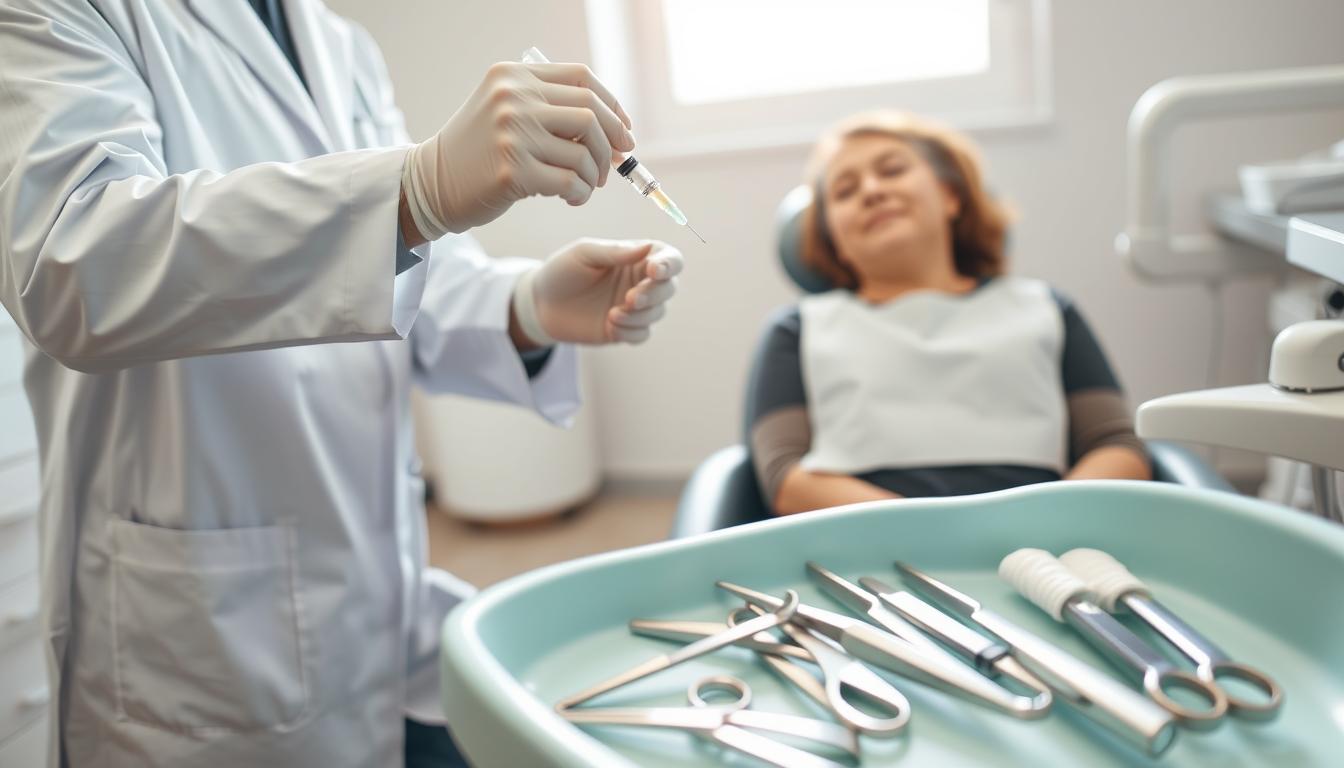
We welcome you to our clinic in Parramatta where we focus on calm, professional treatment during every stage of a dental procedure. Our team explains each step so you feel confident about the process and what to expect.
We provide gentle local anesthesia for tooth extraction to keep you comfortable and free from pain during the surgical visit. We combine advanced techniques with patient-centred care so each removal is safe and efficient.
Our staff listens to concerns and answers questions in plain language. We treat every person with compassion — prioritising comfort, clear explanation and a calm environment for the best outcome after any surgery or extraction.
Key Takeaways
- We deliver gentle, patient-centred care during dental procedures.
- Advanced techniques help reduce pain and speed recovery.
- We explain every step in plain terms to ease anxiety.
- Our clinic in Parramatta focuses on safety and comfort.
- Compassionate staff support you before, during and after treatment.
Understanding Local Anesthesia for Tooth Extraction
Understanding how an anaesthetic works removes mystery and eases nerves before treatment.
According to StatPearls 2026, modern local anesthesia works by reversibly binding to sodium channels and stopping nerve signals. This prevents painful impulses from reaching the brain and makes procedures comfortable.
We tell our patients that the process involves a small injection near the nerve to create temporary sensory loss. We choose the right anesthetic and dose based on medical history and the planned treatment.
Different people metabolise agents at different rates, so we monitor numbness and adjust care. Blocking sensory nerves lets us carry out an efficient extraction while you remain pain-free and calm.
- Safe and effective: proven mechanism and monitoring.
- Personalised choice: agent selection tailored to health.
- Comfort-focused: minimal discomfort during procedures.
| Agent | Onset | Duration | Notes |
|---|---|---|---|
| Lidocaine | 2–3 mins | 60–90 mins | Common, well‑tolerated |
| Articaine | 1–2 mins | 60–75 mins | Good bone penetration |
| Bupivacaine | 5–10 mins | 4–8 hrs | Longer numbness; suited to complex cases |
The Role of Anatomy in Pain Management
Knowing the nerve map of the face and jaws helps us give precise, effective numbness so you feel no pain during treatment.
Trigeminal Nerve Pathways
We study trigeminal branches closely — they carry sensation from the mouth, lips and cheeks. This knowledge lets us target the correct canal and tissue with confidence.
The mylohyoid nerve may supply accessory sensation to certain teeth. It arises from the inferior alveolar nerve roughly 13.4–14.7 mm above the mandibular foramen. Recognising this helps prevent incomplete numbness.
Mandibular and Maxillary Considerations
Bone density and the shape of the jaw influence how an anesthetic spreads. We assess maxillary and mandibular anatomy before placing any solution so the site receives the intended effect.
- Targeted care: mapping nerve routes ensures focused treatment with minimal excess dose.
- Variation-aware: our team spots anatomical differences in the canal and tissue to optimise outcomes.
- Patient-centred: precise placement reduces pain and speeds recovery for all patients.
| Anatomical Feature | Clinical Impact | Clinical Action |
|---|---|---|
| Mylohyoid nerve origin (13.4–14.7 mm) | Possible accessory sensation to lower teeth | Adjust injection site; consider supplemental block |
| Mandibular bone density | Alters diffusion of anesthetic | Modify technique and volume for deeper penetration |
| Maxillary cortical bone | Thin bone aids infiltration spread | Use infiltration methods when appropriate |
When anatomy is mapped and respected, we can prevent pain during complex procedures. For clear guidance on our approach and appointments, visit our tooth extraction care page.
Preparing for Your Dental Procedure
We begin every appointment with a clear review of your medical background and any questions you have. This helps us personalise care and keep you safe during a planned extraction.
Please tell us about current medications, allergies and past reactions to drugs. Accurate information lets our team choose the safest approach and avoid complications.
We also check the target tooth under good lighting and explain the planned steps in plain language. If you are anxious, we will discuss comfort options and answer any remaining questions.
Our team supports you every step of the way — share concerns and we will adapt care to suit your needs. For detailed guidance and to book an appointment, see our tooth extraction page.
Common Techniques for Effective Numbing

Effective numbing starts with knowing the anatomy and choosing the right technique. We explain each option so you feel calm and informed before any procedure.
Infiltration methods
Infiltration Methods
We often use infiltration in the maxilla because the porous bone lets an anesthetic spread quickly. This approach works fast and gives good coverage for the area around the teeth.
Patients usually feel numb within minutes. We wait about 10 minutes to check the effects before starting treatment.
Inferior Alveolar Nerve Blocks
For lower jaw work, we may use an inferior alveolar nerve block. This targets the canal and ensures the whole side of the mouth stays numb for the duration of treatment.
We monitor the rate of injection closely to reduce pressure and minimise discomfort. This also helps lower the risk of blood aspiration and other complications.
Supplemental Anesthesia
If standard methods do not provide full numbness, we add supplemental injections. These ensure the target site and nearby tissue become adequately numb so you stay pain-free.
“Precise technique and careful monitoring make numbing safer and more comfortable.”
- Quick onset: suitable choice when bone porosity aids diffusion.
- Duration control: select agents to match the length of your treatment.
- Safety first: we watch for side effects and act if complications arise.
Exploring Sedation Options for Anxious Patients
If dental visits make you nervous, we offer gentle sedation choices that keep you calm and comfortable throughout care.
We tailor every plan to your health and anxiety level. Many patients find that nitrous oxide eases stress quickly and wears off in minutes. It reduces panic without many of the side effects tied to deeper sedation.
For more complex cases, we may propose oral tablets or IV sedation so you remain relaxed during procedures. We monitor blood pressure and oxygen continuously and adjust the rate of delivery to keep effects steady and safe.
Our team is trained to manage risks and reduce complications. We explain each anesthetic option clearly so you choose with confidence. Small adjustments — and careful observation — protect your health throughout treatment.
“Comfort and safety guide every sedation decision we make.”
- Short-acting choices for quick recovery.
- Deeper sedation for complex procedures when clinically required.
- Continuous monitoring of pressure, blood and oxygen to prevent complications.
For an evidence-based overview of sedation safety, see this sedation safety review. We will discuss the right option for your visit and answer all questions before any procedure.
Safety Considerations and Medical History
A careful medical review helps us tailor drugs and doses to each patient’s needs and risks.
We always record heart and kidney status before any anaesthetic plan. This ensures the safest choice of agent and dose for adults with existing health issues.
Managing Cardiovascular and Renal Health
For patients with cardiovascular disease we limit adrenaline to 0.04 mg, compared with 0.2 mg used in healthy adults. This reduces the risk of raised blood pressure and cardiac stress.
We also adjust anesthetic amounts for older adults and for those with liver or kidney impairment. Reduced metabolism or clearance can lengthen the duration and effects — so lower doses often work best.
- We prefer infiltration where bleeding risks exist to avoid deeper block complications.
- We take extra care when patients use anticoagulants — planning procedures to minimise bleeding.
- Vital signs — blood pressure, pulse and oxygen — are monitored throughout the visit.
| Clinical Factor | Action | Why it matters |
|---|---|---|
| Cardiovascular disease | Limit adrenaline to 0.04 mg | Reduces risk of pressure spikes and arrhythmia |
| Renal or hepatic impairment | Lower anesthetic dose; monitor duration | Prevents prolonged effects and toxicity |
| Bleeding disorders / anticoagulants | Use infiltration; plan haemostasis | Minimises bleeding complications |
“Our priority is a safe, personalised plan that protects your heart, kidneys and overall health.”
Managing Potential Complications
Even with precise technique, unexpected issues can arise; our team is ready to respond quickly and calmly.
We prepare to manage rare complications such as nerve irritation or blood aspiration during a tooth extraction. Our priority is to limit risk and keep patients comfortable.
Precise placement of the anesthetic away from the mandibular canal reduces the chance of nerve or tissue damage. We also watch the jaw and mouth closely after procedures to spot any early signs of trouble.
If you have pain, swelling or unexpected bleeding, we give clear, simple steps to manage symptoms and when to contact us. Adults with medical conditions receive tailored care and adjusted drug doses to lower risks.
- Immediate measures to control bleeding and protect the airway.
- Supplemental blocks or medications when numbness is incomplete.
- Clear aftercare instructions and a direct phone line for concerns.
“Our team plans for complications so your recovery stays safe and calm.”
| Complication | Signs | Immediate action | Follow-up |
|---|---|---|---|
| Nerve irritation | Prolonged numbness or tingling | Stop procedure; assess sensation | Review within 24–72 hrs; specialist referral if persistent |
| Bleeding | Continuous bleeding at site | Apply pressure; local haemostasis | Check clot; advice on activity and meds |
| Blood aspiration | Coughing, breathing difficulty | Protect airway; emergency care | Observation and respiratory review |
| Infection | Increasing pain, swelling, fever | Start antibiotics; drain if needed | Monitor; arrange review and wound care |
The Importance of Professional Dental Care

Professional care reduces risk and helps patients feel secure before any dental procedure.
We believe expert attention makes a real difference. Skilled clinicians assess each case and choose the safest plan—minimising pain and complications during surgery.
Our focus is anxiety-free treatments. We explain your options, show likely recovery rates and answer questions so you feel informed and calm.
By addressing dental anxiety directly, we make it easier for you to accept necessary tooth extraction and follow-up treatment. This improves outcomes and speeds healing.
We tailor care to your needs — using the best local anesthesia techniques and gentle methods to protect your health.
“Quality dentistry combines technical skill with compassionate support.”
| Benefit | What we do | Patient result |
|---|---|---|
| Safety | Thorough assessment and personalised plan | Lower complication rate and clearer expectations |
| Comfort | Gentle methods and clear information | Reduced pain and less anxiety during procedures |
| Confidence | Open discussion of options and recovery | Patients feel supported and more likely to complete treatment |
Modern Technology in Anesthetic Delivery
Our clinic uses modern, computer-controlled delivery systems to make injections far gentler and more predictable.
These devices let us manage the exact pressure and rate of anesthetic so patients feel less discomfort during a procedure.
Steady flow helps the agent reach bone and soft tissue evenly, which gives more profound numbness and reduces the need for extra shots.
We also monitor oxygen levels and blood pressure while we work. This keeps safety high and lets us respond quickly if the body shows a change.
- Controlled pressure and rate lower pain and tissue trauma.
- High precision reduces the risk of complications and side effects.
- Useful in complex cases — the jaw and surrounding area stay comfortable for many minutes.
“Technology like this helps us deliver confident, anxiety‑free care.”
Post-Operative Care and Recovery
After your procedure, simple steps at home make a big difference to healing and comfort.
We give clear instructions on caring for the site and managing any lingering effects of the local anesthesia and anaesthetic drugs. Expect numbness in the mouth or jaw to fade over minutes to hours; avoid hot drinks until sensation returns.
Rest and limit activity for a short time so blood pressure and bleeding stay low. If bleeding continues, apply gentle pressure with clean gauze and call us — we are here to help.
We outline pain management options—simple analgesics and cold packs work well while tissues heal. Follow our written care plan to reduce risks and support the surrounding bone and teeth.
“Our team is available to answer questions at every stage, ensuring you feel supported through recovery.”
- Monitor the area: watch for swelling, increasing pain or fever.
- Follow medication advice: take doses as directed.
- Contact us: any worrying sign and we will review promptly.
Visit Our Parramatta Clinic for Gentle Treatment
Visit our Parramatta clinic where gentle dentistry meets modern, patient-centred care.
Our Location Details
Address: 37 Grose St, Parramatta, NSW, 2150, Sydney, Australia.
We provide calm, professional treatment and a range of treatment options to support your oral health.
Contacting Our Team
Phone: 02 8036 2411 — call to book a consultation, including appointments for a tooth extraction.
We specialise in anxiety-free care and help patients choose the best options before any surgery.
- Friendly staff who listen and explain each step.
- Modern clinic layout and equipment for high-quality care.
- Personalised plans that match your health needs and reduce anxiety.
| Detail | Info | Why it helps |
|---|---|---|
| Address | 37 Grose St, Parramatta, NSW 2150 | Easy to find and close to public transport |
| Phone | 02 8036 2411 | Quick booking and direct support for patients |
| Services | General dentistry, minor surgery, anxiety support | Comprehensive care in one convenient location |
“We aim to reduce dental anxiety and make every visit comfortable.”
For practical tips on recovery after wisdom procedures, see our wisdom teeth recovery guide.
Conclusion
Conclusion
We finish by highlighting how skilled care and clear information reduce risk and ease anxiety. Our team aims to keep you comfortable — using modern techniques and a considered anesthetic plan so pain stays minimal.
Choosing professional dentistry helps protect bone and nearby structures while improving recovery rates. We welcome questions and will explain options, timing and any likely effects in plain language.
Contact us if you’d like to discuss local anesthesia, your planned extraction or other concerns. We are here to support patients with calm, confident care every step of the way.
FAQ
What should I expect when we numb the area before a removal?
We begin with a gentle topical gel to reduce the sting, then place a precise injection near the treatment site. This blocks nerve signals so you feel pressure but not pain. The whole numbing process takes a few minutes, and we check sensation before we start to ensure you’re comfortable.
How long will the numbness last after the procedure?
Most patients experience loss of feeling for one to four hours, depending on the medication used and the site treated. We give clear aftercare advice — like avoiding hot drinks and not chewing on the numb side — to prevent accidental bites while sensation returns.
Is it safe if I have high blood pressure or kidney issues?
We review your medical history and current medications to choose the safest option. Some vasoconstrictors can affect blood pressure, so we may adjust the dose or select an alternative. If you have significant heart, renal or other systemic conditions, we coordinate with your GP or specialist as needed.
Can we offer extra help if I’m anxious about the treatment?
Yes — we provide comforting techniques and sedation options, including oral sedatives and inhalation sedation, to reduce fear and make the visit calm. We tailor the approach to your needs so you remain relaxed yet responsive throughout.
Will the numbness affect my breathing or consciousness?
The agents we use at the clinic act at the site and do not typically alter breathing or consciousness. When we provide sedatives, we monitor oxygen levels and vital signs continuously to keep you safe and comfortable.
Are there risks or complications I should know about?
Complications are uncommon. Possible side effects include temporary numbness beyond the expected time, bruising, or a small risk of nerve irritation. We explain signs to watch for and how to contact us immediately if you notice unusual bleeding, prolonged numbness, swelling, or severe pain.
What should I tell you before my appointment?
Please inform us about all medications, including anticoagulants, blood pressure treatments, and any allergies. Mention past reactions to dental medicines, pregnancy, diabetes, or recent infections — this helps us plan safe, effective care.
Can children or older adults receive the same techniques?
We adapt our approach for each age group. Children and older adults may need different doses or techniques and additional monitoring. Our team has experience treating families and seniors, prioritising comfort and safety for every patient.
What if the initial injection doesn’t fully block sensation?
Sometimes we give a supplemental injection or use targeted infiltration to reach small nerve branches. We may also use a long-acting option or coordinate with sedation to ensure a pain-free experience during the procedure.
How do modern devices improve the experience?
We use advanced delivery systems and fine-gauge needles to reduce discomfort, plus digital imaging to guide placement and avoid sensitive structures like bone and nerve pathways. These technologies enhance precision, reduce risk, and speed recovery.
When can I eat and drink after treatment?
Wait until numbness has fully worn off before eating — usually one to four hours. Start with soft foods and avoid hot or crunchy items for the first 24 hours. We’ll give tailored postoperative instructions based on your specific procedure.
How do we manage bleeding after a removal?
We use pressure dressings and provide clear step-by-step care: bite on gauze, avoid rinsing or spitting forcefully, and rest. Minor oozing is normal; if bleeding persists or increases, contact us promptly for advice or review.
Do we provide emergency support if complications occur after hours?
We offer guidance and direct contact options for after-hours concerns. For true emergencies — heavy bleeding, breathing difficulty or allergic reactions — call emergency services immediately and then contact our clinic as soon as possible.
Why choose our Parramatta clinic for treatment?
We combine compassionate care with clinical expertise and modern equipment to make procedures as comfortable as possible. Our team supports you from consultation through recovery, focusing on gentle techniques that reduce anxiety and promote excellent outcomes.